
Behind the S-Curve · Insight · Marketing & Commerce
Retail trends 2026–2030: 10 shifts operators should prepare for in the next five years
Ten retail trends matter for a retail business in 2026–2030: AI shopping agents, store-based e-commerce, video selling, retail media, older shoppers, cash-careful households, higher-spending tourists, store automation, green-claim rules and privacy rules; a box at the end checks the retail trends 2025 list.

Key numbers
61billion USD20
Thai e-commerce GMV forecast for 2030, up from $36 billion in 2025 (e-Conomy SEA 2026, Oct 2026)
19.4%14
of Thailand's population projected to be 65 or older in 2030, up from 16.0% in 2025 (World Bank, Jul 2026)
85.2%15
Thai household debt to GDP in Q2 2026 (NESDC, 23 Nov 2026)
10–20%1
of US e-commerce that Morgan Stanley expects AI shopping agents to reach by 2030 (forecast of 8 Dec 2025)
Contents (9)
- The tension
- The insight
- The tension
- The insight
- What leaders do
- Sources
The tension 01 / 09
Key takeaways in 60 seconds
Ten retail trends deserve preparation for 2026–2030: four from how shoppers buy, three from the Thai market and three in the store. Jenosize analysis
AI is starting to shop for customers. Morgan Stanley forecast on 8 Dec 2025 that AI shopping agents could account for $190–385 billion, or 10–20%, of US e-commerce by 2030 1.
Thai e-commerce is forecast to keep growing. e-Conomy SEA 2026, released on 21 Oct 2026, forecasts Thai e-commerce GMV to rise from $36 billion in 2025 to $61 billion in 2030 20.
Thai shoppers are getting older and more careful with money. The World Bank's projections (updated Jul 2026) show the share of Thailand's population aged 65 and over rising from 16.0% in 2025 to 19.4% in 2030 14; Thailand's Office of the National Economic and Social Development Council (NESDC) puts household debt at 85.2% of GDP in Q2 2026 15.
Retail trends 2025: digital shelf labels clearly happened. By 2 Mar 2026, roughly 2,300 Walmart US stores used them 10; most of the first edition's other 2025 trends happened only in part. Jenosize analysis
The tension 02 / 09
Retail trends 2026–2030: the 10 shifts in one view
All ten on one page, with the first move for each.
Exhibit 1
Ten trends: four from shoppers, three from the Thai market, three in the store
How to read: one box per trend, with a first move under its name; each forecast's maker, date and target year, and the evidence, are in chapters 03–05.
- 01AI shopping agentsMake product data match on every channel.
- 02Store-based e-commerceMeasure online orders fulfilled per store.
- 03Video and live sellingStart where video already sells.
- 04Retail mediaList your media and its consented data.
- 05Older shoppersTest stores and apps with over-65s.
- 06Cash-careful householdsSet three price tiers per core category.
- 07Higher-spending touristsTrack sales per foreign customer.
- 08Store automation and back-office AIStart with a task you can time.
- 09Green-claim rulesKeep evidence for every green claim.
- 10Privacy rulesMap each system's data and consent.
The insight 03 / 09
New retail trends: how shoppers find and buy
Trends 01–04: AI agents, stores that ship, video and in-store media.
01 AI shopping agents
AI assistants are starting to compare products and buy for shoppers. Morgan Stanley forecast on 8 Dec 2025 that such agentic shoppers could account for $190–385 billion, or 10–20%, of US e-commerce by 2030 1. WPP Media forecast on 16 Jun 2026 that generative-search advertising will grow from $5.1 billion in 2026 to over $100 billion by 2030 2. From 1 Nov to 31 Dec 2025, Adobe saw traffic from generative AI tools to US retail sites rise 693.4% year on year 3.
In Thailand, e-Conomy SEA 2026 (Google, Temasek and Bain & Company, released 21 Oct 2026) says Thai users are the most open in the region to adopting agentic AI, particularly for trip planning, travel booking and online shopping, and that 41% of consumer journeys begin with AI 20. A year earlier, the 2025 edition called Thai users the region's most reserved about conversational AI and delegating decisions 4. First move: make names, prices, stock and specifications match on every channel, then ask the main AI assistants about your 20 best sellers and log the answers. Jenosize analysis See AI search marketing strategies.
02 Store-based e-commerce
Bain's analysis in e-Conomy SEA 2026 puts Thai e-commerce GMV at $36 billion in 2025 and $43 billion in 2026 (an estimate), and forecasts $61 billion in 2030 20. Walmart's global e-commerce grew 17% in the quarter to 31 Oct 2026, led by store-fulfilled pickup and delivery 6. In Thailand, CP ALL, which runs 7-Eleven, reported O2O sales through 7Delivery and All Online at 11% of its 2025 sales 7 (Jenosize has worked for 7-Eleven; see the work at the end).
Exhibit 2
Thai e-commerce is forecast to grow from $36 billion in 2025 to $61 billion by 2030
How to read: Thai e-commerce gross merchandise value (GMV) in billions of US dollars. 2026 is the report's estimate; the last bar is a forecast, not a result.
First move: measure how many online orders each store fulfils a day, and how long each takes. Jenosize analysis See phygital explained.
03 Video and live selling
e-Conomy SEA 2025's Thailand pages, using Cube data for 2025, show 850,000 sellers and stores in Thai video commerce (up 175% year on year) and 1.3 billion transactions (up 30%); fashion and accessories, and beauty and personal care, each made up 21% of its GMV 4. First move: go live on a fixed schedule for a quarter in a category where video already sells, and compare the margin after platform fees with other channels. Jenosize analysis See 7 LIVE commerce techniques.
04 Retail media
Retail media means a retailer selling ad space on its own apps, sites, screens and shelves, targeted with its purchase data. Jenosize analysis As of 23 Nov 2026, Walmart Connect's home page calls its offer retail media built on Walmart's online and in-store transaction data 8; Walmart's US advertising grew 37% in the quarter to 31 Oct 2026 6. In Thailand, as of 23 Nov 2026, Central Group's The 1 Ads page lists over 700 digital screens and 20 million The 1 members 9 (Jenosize has worked for Central Group companies). First move: list the media you own and the consented data behind each before pricing it for brands. Jenosize analysis
The tension 04 / 09
Retail industry trends in Thailand: older, tighter, tourist-led
Trends 05–07, from official statistics and forecasts.
05 Older shoppers
The World Bank's population estimates and projections (updated 1 Jul 2026, based on the UN's World Population Prospects) put people aged 65 and over at 16.0% of Thailand's population in 2025 and 19.4% in 2030, and the working-age (15–64) share at 69.6% falling to 67.7% 14.
Exhibit 3
People aged 65 and over are projected to reach 19.4% of Thailand's population by 2030
How to read: share of the population aged 65 and over, from the World Bank's estimates-and-projections series; the full bar is 25%.
First move: test stores, app and delivery with customers aged 65 and over: label print size, places to rest, phone ordering and home delivery. Jenosize analysis
06 Cash-careful households
The NESDC reported on 23 Nov 2026 that household debt was 85.2% of GDP in Q2 2026 and that real wages fell 3.27% in Q3 2026 15. On 16 Nov 2026 it projected private consumption growth of 2.0% for 2027, down from 2.3% in 2026 16. First move: set entry, standard and premium price tiers in each core category and track monthly how baskets move between them. Jenosize analysis
07 Higher-spending tourists
The NESDC reported on 16 Nov 2026 that international arrivals fell 3.8% to 23.199 million in the first nine months of 2026, and projected foreign tourism receipts of 1.72 trillion baht for 2027, up from 1.59 trillion in 2026, citing high-spending long-haul visitors 16. First move: in tourist-area stores, track sales per foreign customer and accept the payment methods your main visitor groups use. Jenosize analysis
The insight 05 / 09
Retail store trends: automation and tighter rules
Trends 08–10: back-office work, green claims and customer data.
08 Store automation and back-office AI
Walmart wrote on 2 Mar 2026 that roughly 2,300 US stores use digital shelf labels, with chain-wide use expected within a year, and that price changes that took days now take minutes 10. About 14% of US retail businesses used AI in the survey period ending 3 May 2026; about 17% expected to within six months 13. Thailand's working-age share is projected to shrink 14. Tools that save staff time will matter more. Jenosize analysis First move: automate a task you can time, such as price changes or picking online orders, and measure the minutes before and after. Jenosize analysis See AI in convenience stores.
09 Green claims and unsold goods
Under Directive (EU) 2024/825, EU member states must ban unproven generic environmental claims such as eco-friendly from 27 Sep 2026 17. Under Regulation (EU) 2024/1781, destroying unsold apparel, clothing accessories and footwear is banned from 19 Jul 2026; medium-sized enterprises follow from 19 Jul 2030 and micro and small ones are exempt 18. Both are EU rules; Thai rules on the same topics were not checked. First move: list every green claim on packs, shelves and ads with its evidence. Jenosize analysis
10 Privacy rules
Section 26 of Thailand's Personal Data Protection Act B.E. 2562 (2019) bars collecting biometric data, such as facial recognition data, without explicit consent, except in the cases it lists 19. In e-Conomy SEA 2025's survey, 47% of Thai users voiced privacy and data-security concerns about agentic AI (ASEAN average 50%) 4. As of 23 Nov 2026, Amazon says Just Walk Out does not use or collect shoppers' biometric information 12. First move: list what each loyalty system, screen and camera collects, and under which consent. Jenosize analysis
Over 2026–2030, Thai retailers gain most from making products easy to find, trust and buy.
The insight 06 / 09
Retail trends 2025: what actually happened
The first edition's ten trends for 2025, checked.
The first edition (last edited 18 Oct 2024) predicted ten trends for 2025: AI, phygital, cashier-less stores, data analytics, smart signage, electronic shelf labels, retail content, CMS, sustainability and experiential shopping. A check on 22 Nov 2026 found one seen, seven partly seen and two (content and CMS) not yet checked. Jenosize analysis
- Electronic shelf labels: seen. Roughly 2,300 Walmart US stores used them by 2 Mar 2026 10.
- Cashier-less stores: partly. Amazon announced on 27 Jan 2026 that it would close Amazon Go and Amazon Fresh; Just Walk Out runs in over 360 third-party locations 11.
- Phygital: partly. E-commerce was 17.9% of US retail sales in Q3 2026 5; O2O was 11% of CP ALL's 2025 sales 7.
- AI: partly. About 14% of US retail businesses used AI in the survey period ending 3 May 2026 13.
- Smart signage: partly. It showed up mostly as in-store media sold to brands, as in trend 04. Jenosize analysis
The insight 07 / 09
Questions about retail trends
Which product categories led Thai video commerce in 2025?
The Thailand pages of e-Conomy SEA 2025, using Cube data for 2025, show fashion and accessories, and beauty and personal care, each at 21% of video commerce GMV.
What leaders do 08 / 09
The future of retail: where leaders start
Jenosize's recommendation for three roles.
CEO
Pick the three trends that hit your margin first
Score the ten trends in chapter 02 by their effect on your sales and costs, and fund 2027 trials of the top three.
CMO
Make AI and video describe your products right
Check what AI assistants say about your best sellers, and go live in a category where video already sells, with a fixed schedule and a margin target.
COO
Time store tasks before buying automation
Time price changes and online-order picking in your stores before and after any new tool, and automate the slowest task first.
What to watch to 2030
- Whether the NESDC keeps its 2.0% private consumption forecast for 2027 at its next quarterly release 16
- Whether Walmart reaches chain-wide digital shelf labels by Mar 2027, as it expected 10
- AI shopping agents' share of US e-commerce against Morgan Stanley's 10–20% for 2030 1
- The EU ban on destroying unsold apparel and footwear reaching medium-sized enterprises on 19 Jul 2030 18
How Jenosize helps
Jenosize describes itself as a Business Growth Transformation Partner and was founded in 2011. Our consultants find the real constraints on growth and build the business case for the board. Our technology and AI teams build the shared rails; our marketing and events teams put new propositions in front of real customers. See Jenosize's marketing service.
09 / 09
Sources
Grades: A = primary or official · B = reputable secondary · C = needs checking, never published.
- 1A
Morgan Stanley, “Agentic Commerce Impact Could Reach $385 Billion by 2030” (Here Come the Shopping Bots), Morgan Stanley Insights, 8 Dec 2025 Open ↗
Key number 4 · finding 2 · chapter 03 trend 01 · question 1 · watch 3 · The firm's own article (Morgan Stanley Research) · read 23 Nov 2026: agentic shoppers could reach $190–385 billion of US e-commerce spending by 2030, a likely 10% share and an optimistic 20% · a US forecast · the site's robots.txt allows ClaudeBot
- 2A
WPP Media, “This Year Next Year 2026 Midyear Forecast: Global ad revenue to grow 8.9% to $1.3 trillion”, 16 Jun 2026 Open ↗
Chapter 03 trend 01 · The forecaster's own news page · read 23 Nov 2026: Generative Search projected to jump from $5.1 billion in 2026 to over $100 billion by 2030 · a global advertising revenue forecast
- 3A
Adobe, “Adobe: Holiday Shopping Season Drove a Record $257.8 Billion Online with Consumers Embracing Generative AI Tools”, Adobe Newsroom, 7 Jan 2026 Open ↗
Chapter 03 trend 01 · question 1 · The company's own data (Adobe Analytics) · read 23 Nov 2026: from 1 Nov to 31 Dec 2025, traffic to retail sites from generative AI tools rose 693.4% year on year · US retail sites · Adobe notes the base of users remains modest
- 4A
Google, Temasek and Bain & Company, e-Conomy SEA 2025, Thailand country report (PDF), released 11 Nov 2025 Open ↗
Chapter 03 trends 01 (the 2025 edition's survey) and 03 · chapter 05 trend 10 · questions 1 and 3 · The publishers' report, read from Google's copy · read 23 Nov 2026 with pages 3, 6 and 7 opened as images: page 3 (Bain analysis) Thai e-commerce $22, 27 and 33 billion in 2023–2025 and ~59 in 2030 · page 6, Google/Milieu survey, Sep 2025, ASEAN-10, n=7,200: 40% of Thai users say they expect AI to make decisions faster and with less mental effort, 47% have privacy concerns about agentic AI (ASEAN-10 average 50%), headline: Thai users are the most reserved in the region about conversational AI and delegating decisions · page 7 (Cube, 2025): 850,000 sellers +175%, 1.3 billion transactions +30%, fashion and beauty 21% each · release date from Google's blog, 11 Nov 2025
- 5A
U.S. Census Bureau, “Quarterly Retail E-Commerce Sales, 3rd Quarter 2026” (CB26-183), 19 Nov 2026 Open ↗
Chapter 06 phygital item · Official statistics · read 22 Nov 2026, re-opened 23 Nov 2026: e-commerce was 17.9% of total retail sales in Q3 2026 (seasonally adjusted, preliminary)
- 6A
Walmart Inc., “Walmart reports third quarter results” (FY27 Q3, quarter ended 31 Oct 2026), earnings release, 19 Nov 2026 Open ↗
Chapter 03 trends 02 and 04 · question 1 · Company earnings release · read 22 Nov 2026, re-opened 23 Nov 2026: global e-commerce up 17%, led by store-fulfilled pickup and delivery · Walmart US advertising up 37%
- 7A
CP ALL Public Company Limited, “Listed Company Snapshot YE/2025”, Stock Exchange of Thailand Open ↗
Chapter 03 trend 02 · chapter 06 phygital item · Listed-company disclosure published through the SET · read 22 Nov 2026, re-opened 23 Nov 2026: 15,945 stores in Thailand at the end of 2025 · O2O sales through 7Delivery and All Online were 11% of total 2025 sales · disclosure: CP ALL runs 7-Eleven in Thailand, which Jenosize has worked for (7-Eleven work at the end); not used as evidence of Jenosize's work
- 8A
Walmart Connect, home page (walmartconnect.com) Open ↗
Chapter 03 trend 04 · questions 1 and 2 · The company's own page, undated · read 22 Nov 2026, re-opened 23 Nov 2026: “Retail Media, Real Results” · uses Walmart's online and in-store transaction data to reach the right audience
- 9A
Central Group, “The 1 Ads” (the1.co.th) Open ↗
Chapter 03 trend 04 · question 2 · The company's own service page, undated · read 23 Nov 2026: a one-stop shop for Central Group's retail media network · over 700 digital screens and 2,500+ static media spots · 20 million The 1 Members including 8 million app users · disclosure: Central Pattana and Central Restaurants Group, both in Central Group, are listed among Jenosize's work clients; The 1 Ads is not Jenosize's work
- 10A
Walmart, “How the Shelf Got Smarter and Our Jobs Got Easier”, Walmart Corporate, 2 Mar 2026 Open ↗
Finding 5 · chapter 05 trend 08 · chapter 06 shelf-label item · watch 2 · Company announcement · read 22 Nov 2026, re-opened 23 Nov 2026: roughly 2,300 US locations use digital shelf labels, chain-wide expected within the next year · work that took days now takes minutes
- 11A
Amazon, “Amazon doubles down on online grocery delivery and Whole Foods Market expansion to reach more customers”, About Amazon, 27 Jan 2026 (updated 12 May 2026) Open ↗
Chapter 06 cashier-less item · correction (1) · Company announcement · read 22 Nov 2026, re-opened 23 Nov 2026: closing Amazon Go and Amazon Fresh stores · Just Walk Out in over 360 third-party locations across five countries
- 12A
Amazon, “How generative AI helps Amazon eliminate checkout lines and revolutionize the shopping experience”, About Amazon, 8 Sep 2023 (updated 26 Sep 2023) Open ↗
Chapter 05 trend 10 · correction (2) · The company's own page · read 22 Nov 2026, re-opened 23 Nov 2026: Just Walk Out operates independently of Amazon One and doesn't use or collect any biometric information of shoppers · the justwalkout.com FAQ (read 22 Nov 2026) says the same
- 13A
Adam Grundy, Cory Breaux and Dhanapati Khatiwoda, “Large Firms With at Least 20 Employees Biggest AI Users”, U.S. Census Bureau, America Counts, 26 May 2026 (Business Trends and Outlook Survey data, Dec 2025–May 2026) Open ↗
Chapter 05 trend 08 · chapter 06 AI item · Official statistics · read 22 Nov 2026, re-opened 23 Nov 2026: in Retail Trade, around 14% of businesses currently use AI and about 17% expect to in the next six months, below the 19.8% national rate (as of 3 May 2026)
- 14A
World Bank, Population estimates and projections: Thailand, population ages 65 and above and ages 15–64 (% of total population), 2024–2030, updated 1 Jul 2026 (based on the UN Population Division's World Population Prospects) Open ↗
Scene 2 · key number 2 · finding 4 · chapter 04 trend 05 and chart · chapter 05 trend 08 · World Bank official data · read 23 Nov 2026: ages 65+ 16.02% (2025), 16.7% (2026, rounded), 18.05% (2028), 19.41% (2030) · ages 15–64 69.57% (2025) and 67.71% (2030), from indicator SP.POP.1564.TO.ZS in the same series · estimates and projections, not the civil register
- 15A
Office of the National Economic and Social Development Council (NESDC), “Thailand's Social Outlook in the Third Quarter of 2026”, press release, 23 Nov 2026 Open ↗
Scene 1 · key number 3 · finding 4 · chapter 04 trend 06 · Government press release · read 23 Nov 2026 in Thai and English: household debt in Q2 2026 was 16.43 trillion baht, 85.2% of GDP · real wages fell 3.27% in Q3 2026
- 16A
Office of the National Economic and Social Development Council (NESDC), “Thai Economic Performance in Q3 of 2026 and the Outlook for 2026–2027”, press release, 16 Nov 2026 Open ↗
Chapter 04 trends 06 and 07 · watch 1 · Government press release · read 23 Nov 2026 in Thai and English: private consumption projected to grow 2.0% in 2027, down from 2.3% in 2026 · 23.199 million international arrivals in the first nine months of 2026, down 3.8% · foreign tourism receipts projected at 1.72 trillion baht in 2027 against 1.59 trillion in 2026, from high-spending long-haul tourists
- 17A
Directive (EU) 2024/825 (empowering consumers for the green transition), Official Journal of the European Union L series, 6 Mar 2024 (Publications Office copy) Open ↗
Chapter 05 trend 09 · EU law, Official Journal text · read 22 Nov 2026: Annex point 4a generic environmental claims · recital 9 gives eco-friendly as an example · Article 4: apply from 27 Sep 2026 · member states' laws not checked · not legal advice
- 18A
Regulation (EU) 2024/1781 (Ecodesign for Sustainable Products Regulation), Official Journal of the European Union L series, 28 Jun 2024 Open ↗
Chapter 05 trend 09 · watch 4 · EU law, text on EUR-Lex · read 23 Nov 2026: Article 25(1) prohibits destroying unsold consumer products listed in Annex VII (apparel, clothing accessories, footwear) from 19 Jul 2026; not for micro and small enterprises; for medium-sized enterprises from 19 Jul 2030 · later amendments not checked · not legal advice
- 19A
Personal Data Protection Act B.E. 2562 (2019), Section 26, Royal Gazette vol. 136, part 69 Kor, 27 May 2019 (text published by the Personal Data Protection Committee office) Open ↗
Chapter 05 trend 10 · Thai law, Thai text from the PDPC site · read 22 Nov 2026: Section 26 bars collecting biometric data without explicit consent, except in listed cases · biometric data includes facial recognition data · applies in Thailand; not legal advice
- 20A
Google, Temasek and Bain & Company, e-Conomy SEA 2026, Thailand country report (PDF), released with the regional report on 21 Oct 2026 Open ↗
Key number 1 · finding 3 · chapter 03 trends 01 and 02 (and the e-commerce chart) · The publishers' report, read from Google's copy · read 23 Nov 2026 with pages 5 and 6 opened as images: page 6 (Bain analysis) Thai e-commerce GMV $27, 36 and 43 billion in 2024–2026 (2026 an estimate), $61 billion in 2030 and $102 billion in 2035 (forecasts) · page 5: Thai users are the most open to adopting agentic AI, particularly for trip planning, travel booking and online shopping; 41% of consumer journeys begin with AI (Google/YouGov survey of 9,006 AI users in six SEA countries, July 2026; Bain analysis) · release date from Google's blog, 21 Oct 2026 · it updates the 2025 edition's e-commerce figures (source 4)
Left out on purpose: the full 2025 scorecard of the 22 Nov 2026 update (condensed into the chapter 06 box so the article leads with the next five years), with the details only it used: Walmart's 6 Jun 2024 announcement, Amazon's stated reason for closing its own stores and its hospital-cafeteria example, Walmart Connect's in-store ads page and the EU AI Act's rules on emotion recognition and biometric categorisation; companies' own sales-lift figures from their tests; forecasts from reports that could not be opened on the day of writing, namely Krungsri Research's modern trade outlook for 2026–2028, the World Economic Forum's Future of Jobs Report 2025 and McKinsey's reports; a market-wide Thai retail media figure (no readable primary page found); the three original images (they show hands), under the site's real-image rule; all legal advice; and client results as evidence (the work cards at the end are related work only; each card restates its own case page).
About this article: method, AI use, corrections, citation
- How we wrote this
- Adapted from the earlier article at the same address, first written as a look ahead to 2025 and last edited on 18 Oct 2024 (the old site records no publish date). The 22 Nov 2026 update checked all ten of its trends. This 23 Nov 2026 update turns the article into retail trends for 2026–2030: trends chosen from reports and statistics that could be opened, every forecast named with who made it, when and for which year, plus key numbers, a ten-trend overview and two charts; the 2025 check is condensed into the chapter 06 box. Everything was checked against the sources above on 22–23 Nov 2026.
- Use of AI
- Drafted by Fah, a Jenosize AI teammate, from the earlier article and the sources listed, on 23 Nov 2026. A separate reviewer checks every new fact against its source before publication. This article is general information, not legal, financial or investment advice. A named Jenosize expert and a Thai editor still need to read it before it goes live.
- Corrections
- 23 Nov 2026: the page title changed from “Top 10 Retail Trends for 2025: What Operators Need to Know” to “Top 10 Retail Trends for 2026–2030: What Operators Need to Know”, because the article now covers the next five years, and the 2025 check is condensed into a box. 22 Nov 2026, against the first edition (last edited 18 Oct 2024): (1) The first edition said staff-free stores would become common across industries. Amazon announced on 27 Jan 2026 that it would close its Amazon Go and Amazon Fresh stores, while Just Walk Out runs in over 360 third-party locations in five countries 11; this update describes Amazon closing its own showcase stores alongside the system's use at the sites it names, and does not claim the whole industry dropped it. (2) The first edition said cashier-less stores work by facial recognition. Amazon says Just Walk Out does not collect or use shoppers' biometric information 12; this update limits the statement to Amazon's system. (3) The old service link used the anchor “prepare for the true advent of marketing 6.0” for the marketing service page; this update uses “marketing service” in How Jenosize helps. Further factual corrections will be logged here with their dates.
Cite this article
Jenosize (2026). “Retail trends 2026–2030: 10 shifts operators should prepare for in the next five years.” Behind the S‑Curve, updated 23 November 2026. https://www.jenosize.com/en/content/marketing-commerce/10-retail-trends
From Jenosize work
Work by Jenosize on this topic.
 7-Eleven7-Eleven x ButterbearFandom turned into measurable sales · 27x ROASSee the case →
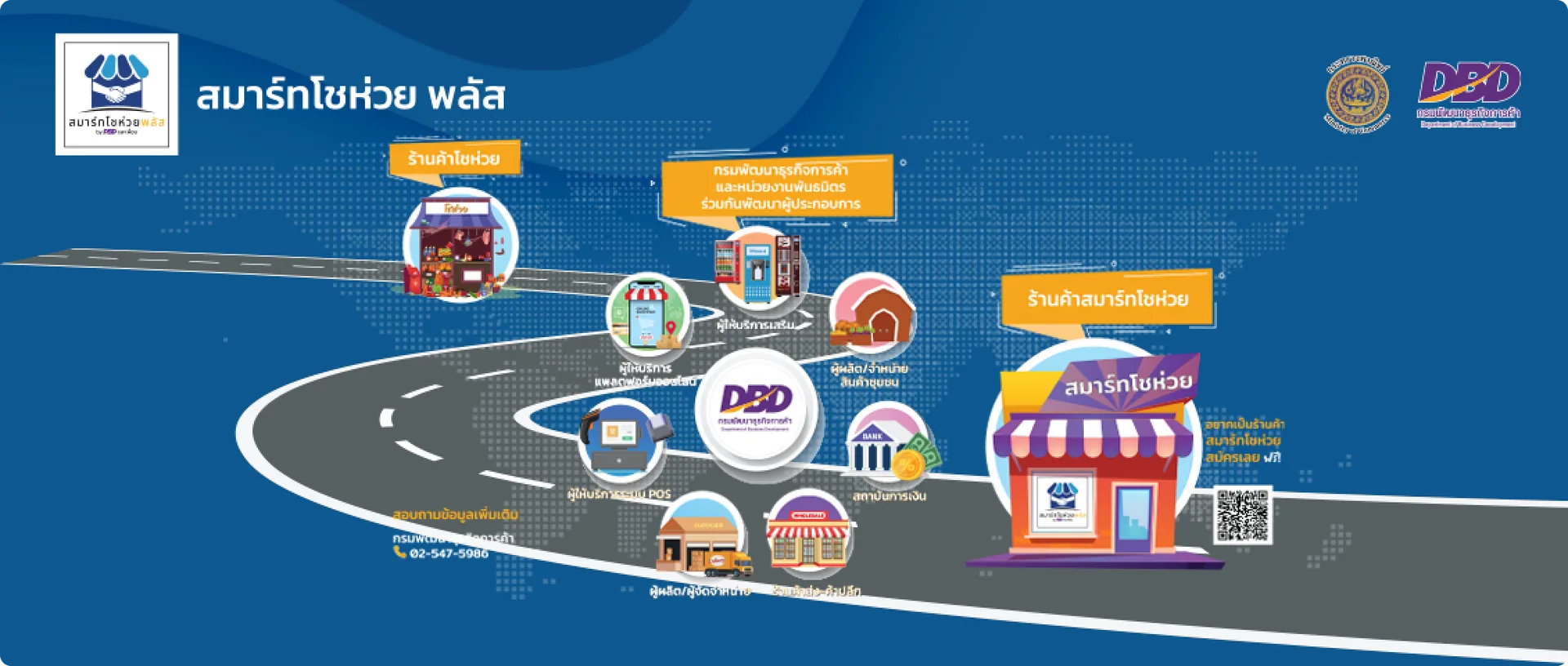 Department of Business DevelopmentHelping neighbourhood grocery stores adaptStock systems, store design and digital-marketing skills, with ministry staff as mentorsSee the case →
 7-Eleven7Verse: a metaverse where friends shop togetherA metaverse shopping community with friends, for 7-ElevenSee the case →
Related



One email a week
S-Curve Weekly
The week's signals and one deep read, chosen for leaders.
One email a week. Leave whenever you like.
Where is your business on its curve?
Talk it through with our growth team: a first conversation, no deck required.