People Solution

Your team uses AI.Is the work actually changing?

We build learning, skills and AI into real work. Then we measure the weeks until people do it alone, not attendance.

01 · Pain points

Why doesn't AI training change how work gets done?

Four reasons the training budget doesn't show up in the work.

01

Training done, but what changed?

You have attendance and certificates, but can't say how much better people work.

02

Everyone uses AI their own way

No shared rules yet on data, who is accountable, or where a person must check.

03

Training ends, and everyone goes back to the old way

What people learned never becomes the new way of working.

04

Change must be fast, with nothing to support it

Hardest for large organisations and the public sector, upskilling many people by one deadline.

The number to watch

Time-to-capability

Weeks from the first session to doing the new task unaided, by role

  • Sales
  • Service
  • Operations
  • Managers

A baseline and target are set before starting.

Our reading
Training changes what people know. Work changes only when the new way is built into the tools and the measures people already use.
02 · What it is

How is building capability different from running training?

A five-step cycle inside real work. AI is a capability the organisation governs, not a personal tool.

  • Before

    One-off training sessions

    Now

    Continuous capability development

  • Before

    Measured by attendance

    Now

    Measured by time-to-capability

  • Before

    Knowledge stays with the learner

    Now

    Knowledge becomes the organization's way of working

  • Before

    AI as a personal tool

    Now

    AI as a governed organizational capability

  • Before

    Course ends, and that's it

    Now

    Learn → try → apply → measure → improve

The goal isn't people who have studied AI. It's an organisation that works with AI every day.

03 · How it works

Measured in time-to-capability, not attendance.

Capability in real work ↑

stays and compoundsfades back
Your baselineTime →
  • Training only
  • Learn → Try → Apply → Measure → Improve
  1. 01

    Learn

    Short, role-based learning

  2. 02

    Try

    Practise on real tasks, with guardrails

  3. 03

    Apply

    Use it in daily work

  4. 04

    Measure

    Time-to-capability against the baseline

  5. 05

    Improve

    Feed what's measured into the next round

Illustration. We measure time-to-capability against your baseline, not attendance.
04 · Growth loop

How does capability keep growing?

The tools people use every day carry the new way of working, and the measures show where it stuck.

What's measured shapes the next round

The loop, step by step:
  1. 01LearnRole-based lessons, short enough to finish
  2. 02TryPractise on the team's own tasks
  3. 03ApplyThe new way goes into daily tools
  4. 04MeasureTime-to-capability, role by role
  5. 05ImproveGaps found shape the next round
05 · Success factors and why Jenosize

What makes AI stick at work, and why Jenosize

  1. Start from the work that must changeRoles and tasks first, then the skills each group needs.
  2. Baseline and target firstSet before day one, so the change can be measured in real use.
  3. Shared rules for AIData, accountability and where human review is required, defined for everyone.
  4. Build it into daily toolsThe new way lives in the apps people already open every day.
200,000+HappyWork users
300+organisations use HappyWork
In productionAI Employee in our own operations
15 yearssince 2011

To make growth possible for every organisation.

How we set up the number before day one

  1. Step 1

    Pick the roles

    Sales, service, operations or managers: where work must change

  2. Step 2

    Name the tasks that change

    The real tasks each role should do the new way

  3. Step 3

    Set baseline and target

    Where each role is today, and where it should get to

  4. Step 4

    Build it into daily tools

    The new way lives in apps people already open

  5. Result

    Weeks to capability, measured role by role

Illustration of the set-up, agreed with each client
06 · Customers and projects

Where is the new way already in daily tools?

1K+ DTAC employees use HappyWork. The new way of working lives in a tool, not a classroom.

None of these cases has published a time-to-capability figure yet. We set that number up with you, a baseline and a target, before work starts.
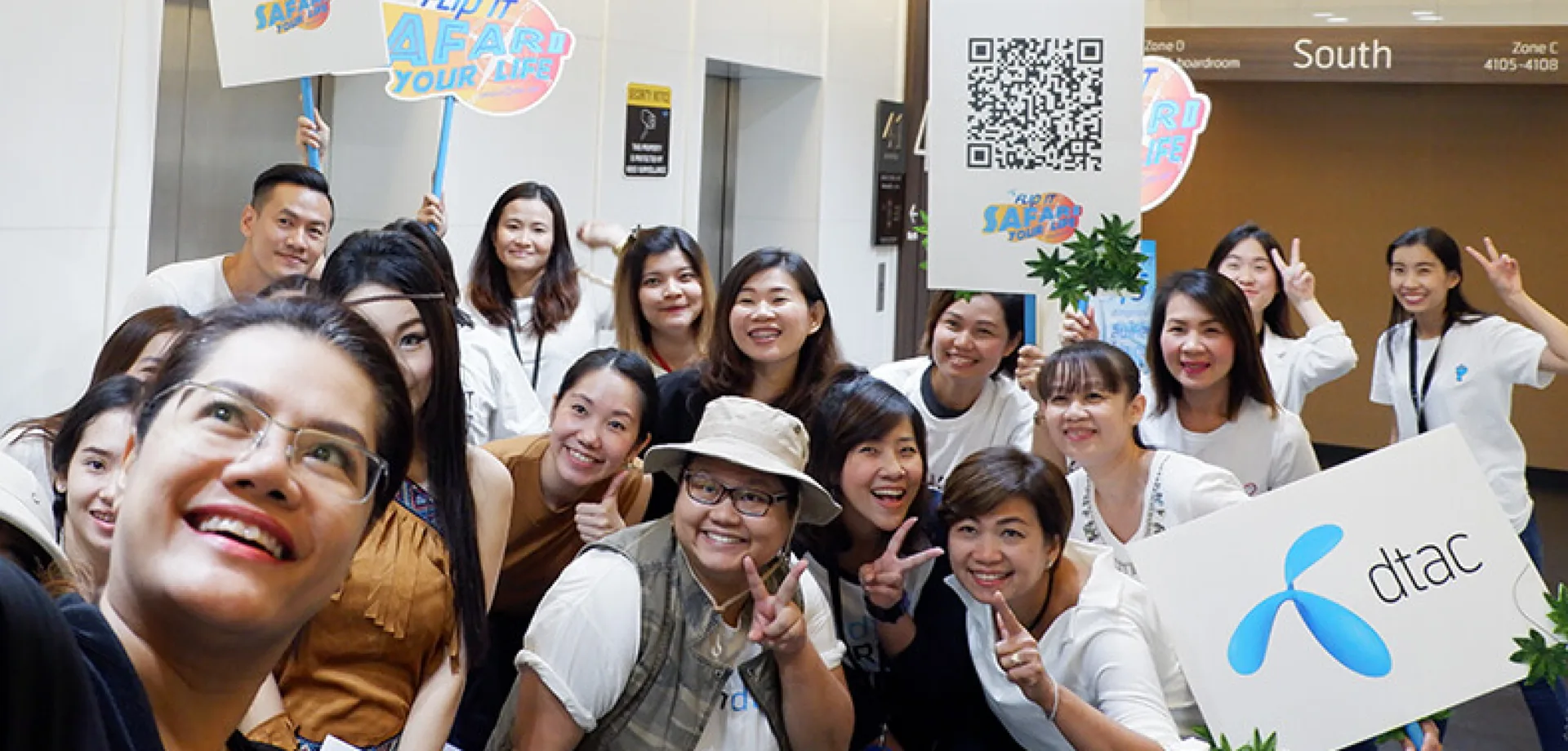
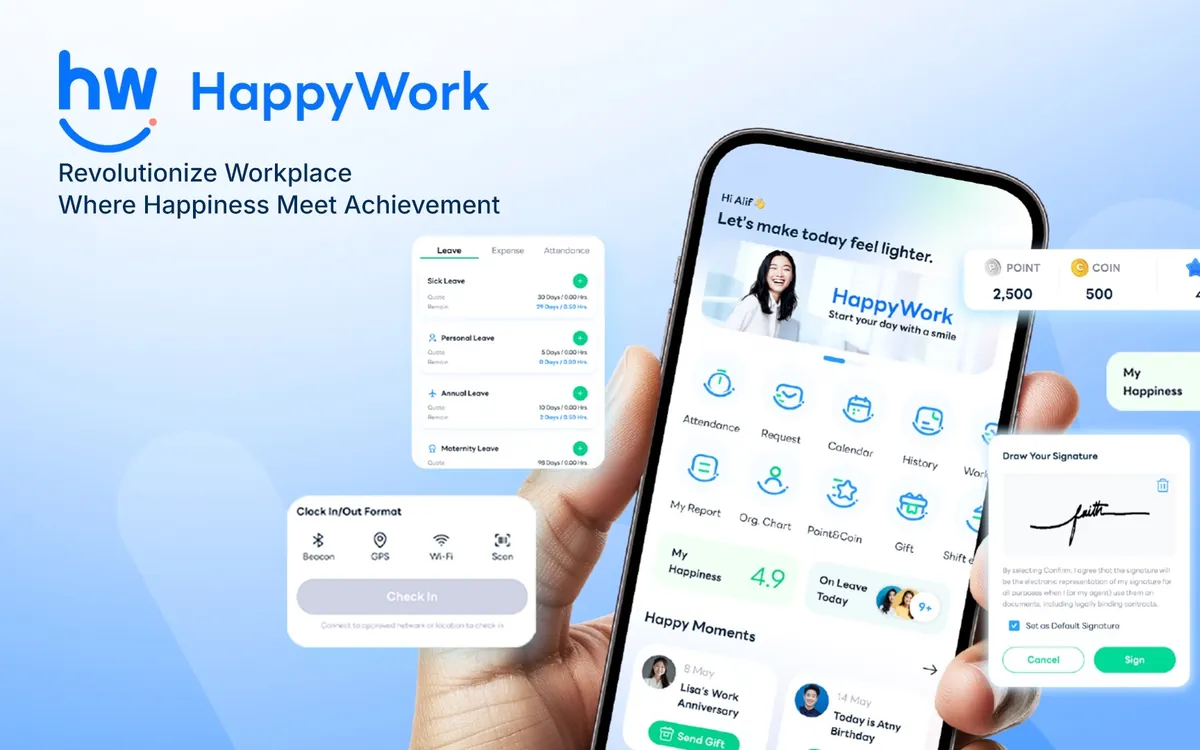
HappyWork HR app used by DTAC employees

DTAC · Telecom

HR work moved into one app

HappyWork was built from real use, around how HR teams, managers and employees actually work.

In under two years from launch, it was serving a large telecom operator: DTAC.

1K+ DTAC employees use it, so the new way of working sits in a tool they already open.

DTAC employees using HappyWork
1K+
from HappyWork's launch to serving DTAC
< 2 years
Read the case
07 · Add-on services and products

What we do best, for your business

FAQ

Frequently asked questions

Jenosize's People Solution runs in a five-step cycle: learn, try, apply, measure, improve. Program details are on the People Growth & Transformation page.

No. Development starts from the roles and work that need to change, then defines the skills each group requires.

A baseline and targets are set before starting, so the change can be measured once it's in real use.

Drive your next S-curve

Want your team using AI, not just studying it?

Tell us about your people or organizational-change challenge.

We only use this to get back to you, per our privacy policy.