
Behind the S-Curve · Explained · Marketing & Commerce
What is Thai soft power, and why most of it comes from outside government
Soft power is the ability to get what you want through attraction rather than coercion or payment, as its coiner Joseph S. Nye Jr. defined it, and Thai soft power is often described through the 5F: food, film, fashion, fighting and festivals.

Contents (8)
- The tension
- The insight
- The tension
- What leaders do
- The insight
- What leaders do
- Sources
The tension 01 / 08
Key takeaways in 60 seconds
Soft power is getting what you want through attraction rather than coercion or payment. Joseph Nye coined the term in his 1990 book Bound to Lead 1; popular culture, education, literature and the arts are examples of where attraction comes from 2.
Culture is one of three sources of soft power. The others are political values and foreign policy, and Nye cautions that cultural popularity does not always translate into influence 2.
The 5F are the five areas of Thai soft power the government promoted when the first edition was written: food, film, fashion, fighting and festival, a frame a government website used for tourism in 2023 7.
The list later grew to 13 industries. In Feb 2025 the then prime minister said the government had set up the National Soft Power Strategy Committee to promote 13 industries 8, and the website of the Thailand Creative Culture Agency (THACCA), read on 22 Nov 2026, shows 13 industry subcommittees 9.
Most of a country's soft power comes from outside government. Nye says it comes mainly from civil society, because propaganda is not credible 1. In 2021, Buriram's meatball stalls could barely keep up with orders after Lalisa “Lisa” Manoban mentioned them in an interview 12.
A business should start from one Thai attraction its customers already seek. Build it into a product or experience, then measure it by what customers choose Jenosize analysis.
The insight 02 / 08
What is soft power, and who coined it?
The coiner's definition, then how it differs from other kinds of power.
Soft power
Soft power is the ability to obtain the outcomes you want through attraction and persuasion rather than coercion or payment, as Joseph Nye defined it 1.
Harvard professor Joseph S. Nye Jr. first used the term in Bound to Lead (Basic Books, 1990) 1 and set it out in detail in Soft Power: The Means to Success in World Politics (PublicAffairs, 2004) 4. He wrote that if you can get others to want what you want, you can economise on sticks and carrots 3. Nye died at 88; Harvard Kennedy School announced his death on 7 May 2025 3.
Literally, the word means power that is soft. Thai usually transliterates it as ซอฟต์พาวเวอร์, and the Thailand Creative Culture Agency (THACCA) describes it as “the power that leads others (other countries) to do what we want willingly, without the use of force” 5. The House of Representatives secretariat's academic office has used the Thai coinage “อำนาจละมุน”, but as of late 2023 there was no settled Thai term 6.
Exhibit 1
Three kinds of power: force or pay, attract, or combine the two
How to read: each row is one kind of power, how it works and the tools it uses.
| Power | How it works | Tools |
|---|---|---|
| Hard power | How it worksCoercion or payment | ToolsMilitary force, threats, sanctions or inducements |
| Soft power | How it worksAttraction and persuasion, so others want what you want | ToolsCulture, political values, and policies others see as legitimate |
| Smart power | How it worksBoth together | ToolsHard and soft power combined into one strategy |
The first edition said the key variable in soft power is the culture of a place: true, but incomplete. Nye names three sources: culture, political values when a country lives up to them, and foreign policy when others see it as legitimate 2. Harvard Kennedy School's Belfer Center adds that a country can be admired without getting the outcomes it wants, and that companies, universities and NGOs can build soft power too 2.
The insight 03 / 08
The 5F of Thai soft power: examples and activities
The five areas as first published, with examples checked against sources.
The first edition said the Thai government defines the 5F. That was the frame when the article was first written (the old site records no publish date), and the Government Public Relations Department's Thailand.go.th used it to promote tourism in 2023 7. The first edition saw Thai culture as distinct and easy to remember in many areas Jenosize analysis.
Exhibit 2
The 5F: five areas of Thai soft power, as first published
How to read: each card is one F, with the examples a government website gave in 2023.
- FoodThai foodKnown internationally; the Michelin Guide Thailand lists street food as well as fine dining
- FilmFilm and seriesIncluding Y (Boys' Love) series with international fans
- FashionFashion and Thai textilesThai fabrics, Thai-style jewellery and handicrafts
- FightingMuay ThaiA martial art many foreigners come to Thailand to learn
- FestivalFestivals and traditionsSongkran, Loy Krathong and newer events such as the Bangkok Art Biennale
1. Food
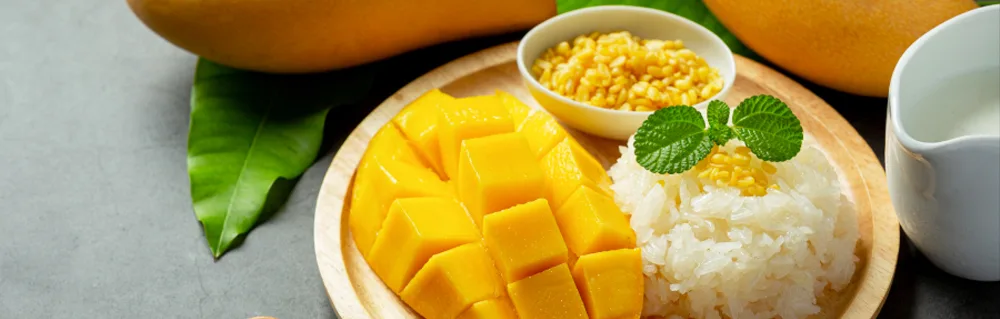
The first edition described Thai food as balancing sour, sweet, rich, salty and spicy flavours, cooked with care and reflecting Thai culture and ways of life Jenosize analysis. A government website says Thai food is known internationally and that the Michelin Guide Thailand includes street food 7.
2. Film
The first edition held that Thai films had grown abroad as production quality neared international standards Jenosize analysis. Sahamongkol's Ong-Bak opened in Thailand in February 2003, screened at the Toronto International Film Festival and was sold for Europe, North and South America, Australia, New Zealand, Japan, Korea, Hong Kong and China 13. Kantana Animation's Khan Kluay (2006), a 3D animated film drawn from Ayutthaya-era chronicles, won Best Feature Film at Animadrid 2006 in Spain, and the Thai Film Archive lists it as national film heritage 14.
3. Fashion
The first edition singled out Thai textiles for their fine work and distinctive, timeless patterns, and saw designs that blend traditional Thai identity with modern trends as winning over Thai and foreign shoppers alike Jenosize analysis. A government website lists the promotion of Thai fabrics, Thai-style jewellery and handicrafts to markets abroad 7.
4. Fighting
Muay Thai is popular internationally, and many foreigners travel to Thailand to learn it 7. Ayutthaya Province honours Nai Khanom Tom as “the grand master of Muay Thai” (บรมครูแห่งวงการมวยไทย) and says 17 March is kept as Muay Thai day, after the story of his win over Burmese fighters in 1774 15. Saensak Muangsurin fought Muay Thai before becoming world famous as a WBC world boxing champion; a long-reach fighter with a heavy left, he was known to fans as “Ai Saeb” and nicknamed “Pink Southpaw” 16.
5. Festival
The first edition saw Thai festivals as giving tourists fun experiences that reflect the Thai way of life Jenosize analysis. A government website names Songkran and Loy Krathong as festivals that draw foreigners 7, and in December 2023 UNESCO inscribed “Songkran in Thailand” on its Representative List of the Intangible Cultural Heritage of Humanity 17.
The tension 04 / 08
Thailand's soft power today: from the 5F to 13 industries
The government's list grew from five areas to 13 industries, and the pages read carry no date.
In Feb 2025 the then prime minister said the government had set up the National Soft Power Strategy Committee to promote 13 industries: tourism, food, films, fashion, festivals, sports, music, art, design, gaming, literature, wellness and performing arts 8.
THACCA's website, read on 22 Nov 2026, shows the National Soft Power Strategy Committee, chaired by the prime minister, which sets the strategy and proposes the national plan to the Cabinet 10, and 13 industry subcommittees 9. The pages carry no date, so this article confirms only what they showed that day; check with the agency before citing the policy.
Exhibit 3
Four of the 5F have a subcommittee named for them on THACCA's website
How to read: each row sets one F beside the subcommittees the page lists; the last row covers areas outside the 5F.
| Area | 5F as first published | Subcommittees on THACCA's website |
|---|---|---|
| Food | 5F as first publishedFood | Subcommittees on THACCA's websiteFood |
| Film | 5F as first publishedFilm | Subcommittees on THACCA's websiteFilm, documentary and animation · drama and series |
| Fashion | 5F as first publishedFashion | Subcommittees on THACCA's websiteFashion |
| Fighting | 5F as first publishedFighting (Muay Thai) | Subcommittees on THACCA's websiteNo subcommittee by this name; there is one for sports |
| Festival | 5F as first publishedFestival | Subcommittees on THACCA's websiteFestival |
| Other | 5F as first published– | Subcommittees on THACCA's websiteTourism, music, art, performing arts, design, games, books |
A government list says which industries the state will promote; what foreigners come to love is another matter Jenosize analysis. Nye says most of a country's soft power comes from civil society rather than government, because propaganda is not credible and does not attract 1. For a business, the attraction has to be built into the product and the experience Jenosize analysis.
What leaders do 05 / 08
Soft power marketing: how businesses use Thai soft power
A real case from Buriram, then what a business can do, F by F.
A Thai soft power example: Buriram's standing meatballs
In September 2021, after releasing “LALISA”, Lisa of BLACKPINK said in an interview that if she went home to Buriram, one thing she wanted was to eat standing meatballs at the railway station 11. On 16 Sep 2021 the Bangkok Post reported orders from other provinces pouring in faster than vendors could keep up 12; Thai PBS reported stalls closing because they had sold out 11.
It started with one line in an interview: customers came to the stalls on their own because they wanted to eat what someone they admire wanted to eat Jenosize analysis. One mention from a person admired around the world can move demand, and that kind of attraction is hard to buy with an ad budget Jenosize analysis. See also influencer strategy in 2025.
Applying it to business, F by F
- Food: Develop Thai dishes that blend traditional recipes with modern techniques but keep their Thai identity; design packaging that stands out; tell the flavour story on social media or through influencer reviews; give the restaurant an attractive, authentically Thai feel; and study tourists' habits and hire staff who speak foreign languages Jenosize analysis.
- Film: Back quality Thai films with funding, locations or equipment; partner with films on licensed merchandise that adds revenue and lets the brand grow with the film; and run film-linked promotions, such as a themed store or a discount for customers dressed as a character Jenosize analysis.
- Fashion: Design everyday fashion that blends traditional Thai identity with contemporary style; promote it across media to reach markets abroad; and build recognition for Thai fashion brands through events and publicity Jenosize analysis.
- Fighting: Open a Muay Thai camp or school that also sells merchandise; let tourism businesses add training or camp visits to cultural packages; and sponsor fighters or have them promote the brand, choosing athletes whose image fits the product Jenosize analysis.
- Festival: Blend Thai culture into products and services, such as festival menus or cultural hotel packages; tell festival stories and legends on websites, social media or video (storytelling techniques); and buy from local producers or hire local artisans, which shows support for local communities and sustainable practice and lifts the brand's image Jenosize analysis.
For a business, the attraction has to be built into the product and the experience.
The first edition opened on soft power as a trend businesses were watching in a crowded digital market, and closed by saying consumers look for special, new and meaningful experiences on top of product quality, and that soft power is one way a business can respond Jenosize analysis. Read more on experiential marketing trends for 2030.
The insight 06 / 08
Frequently asked questions
What are the 5F of soft power in Thailand?
Food, Film, Fashion, Fighting (Muay Thai) and Festival: five areas of Thai soft power that a government website used to promote tourism in 2023.
What is the difference between hard power and soft power?
Hard power uses coercion or payment, such as military force, sanctions or inducements; soft power uses attraction and persuasion.
What leaders do 07 / 08
How leaders use soft power
One move each for the CEO, CMO and product owner, as Jenosize recommends.
CEO
Pick one Thai attraction customers already seek
Start from what customers raise themselves and tie it to a core product, rather than adding Thai motifs everywhere Jenosize analysis.
CMO
Let people customers admire speak in their own voice
The Buriram meatball story began with an interview 11. Choose people who really use the product and can speak without a script Jenosize analysis.
Product owner
Measure it by what customers choose
Set the measure before launch, such as repeat purchases or new-customer bookings, and compare it with the period before Jenosize analysis.
How Jenosize helps
Jenosize describes itself as a Business Growth Transformation Partner and was founded in 2011. Our consultants find the real constraints on growth and build the business case for the board. Our technology and AI teams build the shared rails; our marketing and events teams put new propositions in front of real customers. See Jenosize's marketing service.
08 / 08
Sources
Grades: A = primary or official · B = reputable secondary · C = needs checking, never published.
- 1A
Joseph S. Nye Jr., “Soft power: the origins and political progress of a concept,” Palgrave Communications 3:17008, 21 Feb 2017 (doi:10.1057/palcomms.2017.8) Open ↗
The definition; Nye coined the term in Bound to Lead (Basic Books, 1990), expanded it in 2004 and applied it to individuals and organisations in The Powers to Lead (2008); most of a country's soft power comes from its civil society; propaganda does not attract · The coiner's own article, with a DOI · read 22 Nov 2026
- 2A
Belfer Center for Science and International Affairs, Harvard Kennedy School, “What Is Soft Power?” (last updated 4 Nov 2026) Open ↗
The three sources (culture, political values, foreign policy); hard, soft and smart power; examples of sources of attraction; the warnings that soft power is not popularity and that companies and universities can cultivate it · Harvard research centre · read 22 Nov 2026
- 3A
Harvard Kennedy School, James F. Smith, “Joseph Nye, Harvard professor, developer of ‘soft power’ theory, and an architect of modern international relations, dies at 88,” 7 May 2025 Open ↗
Nye's death at 88, and the Bound to Lead line on getting others to want what you want · Harvard's own announcement · read 22 Nov 2026
- 4A
Belfer Center, Harvard Kennedy School, book record: Joseph S. Nye, Soft Power: The Means to Success in World Politics, PublicAffairs, 30 Sep 2004 Open ↗
The 2004 book's publisher and date · Harvard record · read 22 Nov 2026
- 5A
Thailand Creative Culture Agency (THACCA), “About us” (Thai) Open ↗
The transliteration ซอฟต์พาวเวอร์ and THACCA's own wording of the meaning · Government agency website, page undated · read 22 Nov 2026
- 6B
Thairath Online, “Soft Power คืออะไร มีลักษณะอย่างไร อ่านความหมาย และตัวอย่างที่นี่” (in Thai), 6 Nov 2023 Open ↗
The House of Representatives secretariat's academic office used “อำนาจละมุน”; at the time there was no settled Thai term · News site, context only · read 22 Nov 2026
- 7A
Thailand.go.th, Government Public Relations Department, “Soft Power (5F) of Thailand attracts tourists,” created 10 Mar 2023, updated 12 Jul 2023 Open ↗
The 5F framing (Food, Festival, Film, Fight, Fashion) used to promote tourism in 2023, and the examples for each · Government website · read 22 Nov 2026
- 8A
National News Bureau of Thailand, Government Public Relations Department, “Prime Minister Outlines Thailand’s Vision on Soft Power Promotion,” 24 Feb 2025 Open ↗
The then prime minister said the government had set up the National Soft Power Strategy Committee to promote 13 named industries · Government website · read 22 Nov 2026
- 9A
THACCA, “Committees” page (Thai): the list of committees and subcommittees Open ↗
The 13 industry subcommittees, named as the page lists them · Government agency website, page undated · read 22 Nov 2026
- 10A
THACCA, “National Soft Power Strategy Committee” page (Thai) Open ↗
The prime minister chairs it; it sets the strategy and proposes the national plan to the Cabinet · Government agency website, page undated · read 22 Nov 2026
- 11B
Thai PBS, “Why ‘standing meatballs’: the Buriram street food Lisa loves” (in Thai), 15 Sep 2021 Open ↗
Lisa's interview after LALISA about eating standing meatballs at Buriram station; stalls closing because they sold out · Public broadcaster, context only · read 22 Nov 2026
- 12B
Bangkok Post, “Blackpink's Lisa turns meatball business around in Buri Ram,” 16 Sep 2021 Open ↗
The interview with Woody, the stalls at the station, and orders from other provinces the vendors could hardly keep up with · News site, context only · read 22 Nov 2026
- 13B
Screen Daily, Liz Shackleton, “Besson's Europa takes on Thai boxing drama,” 24 Sep 2003 Open ↗
Ong-Bak's February 2003 Thai release, its Toronto screening, and the rights sold for Europe, the Americas, Australia, New Zealand, Japan, Korea, Hong Kong and China · Film-trade press, context only · read 22 Nov 2026
- 14A
Thai Film Archive (Public Organization), national film heritage entry: “Khan Kluay” (in Thai) Open ↗
Khan Kluay (2006), Kantana Animation's 3D film on Ayutthaya-era chronicles; its Best Feature Film award at Animadrid 2006; its listing as national film heritage · Public organisation · read 22 Nov 2026
- 15A
Phra Nakhon Si Ayutthaya Province, news on the Nai Khanom Tom ceremony (in Thai), 17 Mar 2025 Open ↗
Nai Khanom Tom as “the grand master of Muay Thai”, the 1774 bout against Burmese fighters, and 17 March as Muay Thai day · Provincial government website · read 22 Nov 2026
- 16B
Thairath Online, profile of Saensak Muangsurin (in Thai), 14 Nov 2018 Open ↗
Saensak fought Muay Thai first, then won a WBC world title; fans knew him as “Ai Saeb”; nicknamed “Pink Southpaw” (earlier “World-Collapsing Southpaw”); long reach and a heavy left · News site, context only · read 22 Nov 2026
- 17A
UNESCO Intangible Cultural Heritage, “Songkran in Thailand, traditional Thai New Year festival” (inscribed 2023, 18.COM) Open ↗
Songkran in Thailand inscribed on the Representative List of the Intangible Cultural Heritage of Humanity in 2023 · Intergovernmental organisation · read 22 Nov 2026
Left out on purpose: the “more than 30 countries” figure for Ong-Bak, because none of the pages read counts the countries (this article uses the territories Screen Daily reported instead); sales figures for the Buriram meatball stalls, because they are vendors' accounts in the news, not primary data; the details that the owner barely slept and that Lisa ate there as a child, because the reports read do not give them (they say vendors could hardly keep up and that she wanted to go back and eat there); the budgets, revenue targets and office-holders of the soft power policy, because this article has not checked which plan is in force; the five earlier images that show people or hands (fighters, a Songkran crowd, people at a fashion-design screen and the cover) under the site's real-images rule; the closing invitation to contact Jenosize, with the marketing service link moved to How Jenosize helps; and client results as evidence (the work cards at the end are related work only; each card restates its own case page).
About this article: method, AI use, corrections, citation
- How we wrote this
- Revised from the earlier article at this address (the old site records no publish date) on 22 Nov 2026. The 5F, the examples and every business guideline are kept as first published, with the 5F marked as the frame when the first edition was written; two claims are corrected, one is dated and one is scoped, and the update adds Nye's definition and origin from his own work and Harvard Kennedy School, THACCA's Thai term and meaning, the industry lists from government websites, and a source for each example. Facts were checked against the sources above on 22 Nov 2026. Government policy changes with governments: check with the agency before citing it. The 5F-to-subcommittee table uses the names the page shows; the F-by-F guidelines and the leader moves are Jenosize analysis.
- Use of AI
- Drafted by Fah, a Jenosize AI teammate, on 22 Nov 2026 from the earlier article and the sources listed. This is general information, not legal advice or advice on applying for government support. A named Jenosize expert and a Thai editor still need to read it before it goes live.
- Corrections
- 22 Nov 2026: (1) Dated: the first edition said the Thai government defines the 5F of soft power; this edition marks the 5F as the frame when the first edition was written (the old site records no publish date) and adds the 13 industries the government named in Feb 2025 8 and the subcommittees on THACCA's website read on 22 Nov 2026 9. (2) The first edition called Nai Khanom Tom the “Father of Muay Thai”; this edition uses Ayutthaya Province's term, “the grand master of Muay Thai” 15. (3) The first edition gave Saensak Muangsurin's nickname as the “Devil's Shadow”, which none of the sources read shows; Thairath reports that fans knew him as “Ai Saeb” and that he was nicknamed “Pink Southpaw” (earlier “World-Collapsing Southpaw”), and that his world fame came from a WBC world boxing title 16. (4) Scoped: the first edition named culture as the key variable in soft power; Nye names three sources: culture, political values and foreign policy 2. Also: the first edition called Nye a Harvard professor; this edition adds that he died at 88 3. It uses the territories Screen Daily reported in place of the “more than 30 countries” figure for Ong-Bak 13, and places the meatball stalls “at Buriram railway station”, as the reports read do 11 12.
Cite this article
Jenosize (2026). “What is Thai soft power, and why most of it comes from outside government.” Behind the S‑Curve, updated 22 November 2026. https://www.jenosize.com/en/content/marketing-commerce/what-is-soft-power
From Jenosize work
Work by Jenosize on this topic.
Related

One email a week
S-Curve Weekly
The week's signals and one deep read, chosen for leaders.
One email a week. Leave whenever you like.
Where is your business on its curve?
Talk it through with our growth team: a first conversation, no deck required.