
Behind the S-Curve · Insight · AI & Data
Technology trends 2025: eight forecasts, did they come true or miss?
The eight technology trends of 2025 were IoT, the fade of third-party cookies, cloud and edge computing, the return of email marketing, quantum computing, clean energy, no-code automation and AI that makes decisions.
- The tension · 01
End of 2025: 21.1 billion connected IoT devices expected, about 300 million below the forecast made a year earlier 1.
- The tension · 02
Chrome kept third-party cookies: Google changed course in July 2024 and April 2025 2 3.
- The insight · 03
Most arrived later or in another shape than forecast. Plan on what is measured.

Key numbers
21.1billion1
Connected IoT devices IoT Analytics expected worldwide by the end of 2025, up from 18.5 billion in 2024
85.6%13
Share of all new power capacity added worldwide in 2025 that was renewable: 692 GW
88%15
Organizational AI adoption in the 2026 AI Index from Stanford's Institute for Human-Centered AI (HAI)
945TWh8
Electricity the International Energy Agency (IEA) projects data centres worldwide will use in 2030, more than doubling (projection of Apr 2025)
Contents (7)
- The tension
- The insight
- The tension
- What leaders do
- The insight
- What leaders do
- Sources
The tension 01 / 07
Key takeaways in 60 seconds
The eight new technology trends in 2025 were IoT, the fade of third-party cookies, cloud and edge computing, email marketing's return, quantum computing, clean energy and green technology, no-code automation, and AI that responds and decides, as first listed here. Jenosize analysis
IoT grew steadily, and slower than forecast. IoT Analytics counted 18.5 billion connected IoT devices in 2024 and expected 21.1 billion by the end of 2025, about 300 million below its own forecast a year earlier 1.
Third-party cookies stayed in Chrome. In April 2025 Google kept Chrome's existing cookie choice 3, and in October 2025 it retired most Privacy Sandbox ad tools, Topics included, citing low adoption 4.
Clean energy moved fastest. Renewables made up 85.6% of all new power capacity added worldwide in 2025 13.
AI is in most organisations; its agents still miss often. Organizational adoption reached 88% in Stanford HAI's 2026 AI Index, while AI agents still fail roughly one in three attempts on structured benchmarks 15.
The trends now move as one chain. The IEA projects data-centre electricity use to more than double by 2030 8. AI, cloud capacity and energy now belong in one plan. Jenosize analysis
The insight 02 / 07
New technology trends in 2025: the eight as first published
What each trend asked of business when this list first ran.
This list first ran as a look ahead to 2025 (the old site records no publish date). Its premise then: the previous two or three years had produced a wave of new technologies and innovations, developing fast with no sign of turning back, so businesses had to adapt to stay competitive, and 2025 would be a year of major change in technology. Jenosize analysis
- IoT links devices more efficiently and reshapes many industries. Businesses use it to raise production efficiency, manage inventory and serve customers better, and it brings smart homes and smart cities closer, making daily life and work more convenient. The first version expected more than 75 billion IoT devices by 2025; IoT Analytics, which counts gateways and devices but not phones, computers or tablets, expected 21.1 billion by the end of 2025 1.
- Cookies fade as privacy gains weight. Websites used to open with a request for consent to store cookies, which can carry data about each visitor. That would hit digital marketing hard, so marketers would need new ways to collect data and follow consumer behaviour. The first version said Google planned to phase out third-party cookies by the end of 2024, with FLoC a possible replacement still in testing; Google had replaced FLoC with Topics in January 2022 5, proposed user choice instead of a phase-out in July 2024 2 and kept Chrome's cookie settings as they were in April 2025 3. What first-party data means for marketers
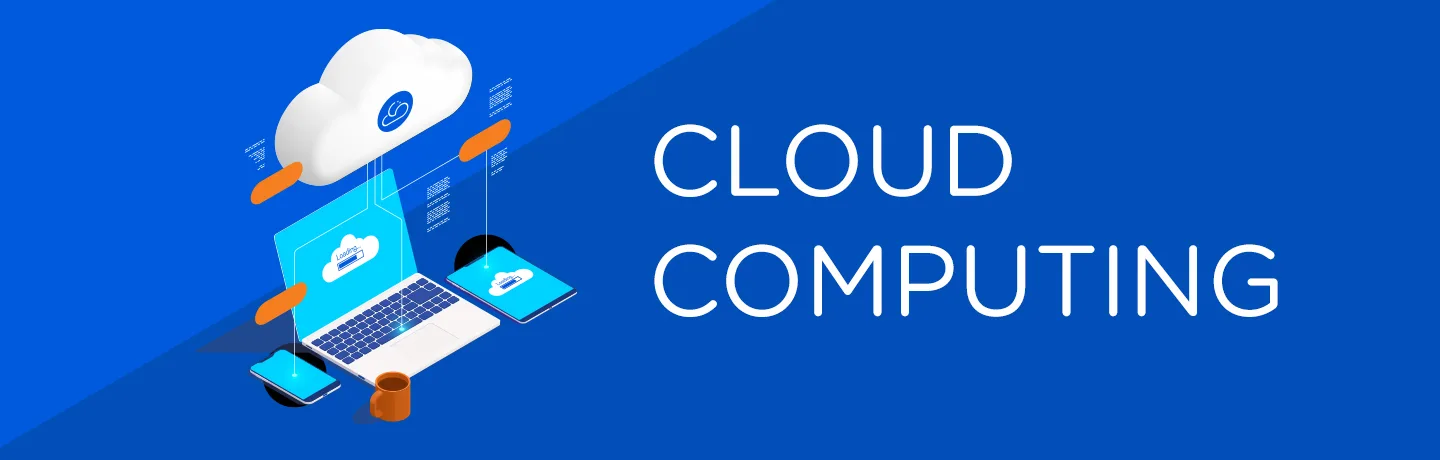
- Cloud and edge computing. Cloud gives businesses flexible, cost-effective computing; edge computing cuts delay by processing data near where it is made. Together they lift IoT and AI, with uses in smart manufacturing, autonomous transport and telemedicine. The first version also quoted “many experts” forecasting a $61 billion edge market by 2028; it named no source, so this update does not rely on that figure.
- Email marketing returns. When consumers worry about privacy, email is a private channel the brand controls. AI analysis makes each message fit its reader better, and interactive email lets readers act inside the message, which lifts engagement.
- Quantum computing arrives. It could matter most in finance, medicine and scientific research. It also threatens today's encryption, so businesses should prepare and consider encryption that resists quantum computers. The first version said quantum computing could solve complex problems millions of times faster than ordinary computers; Google's published speed-ups hold only for specific tasks, from 13,000 times on one verifiable algorithm 11 to a benchmark with no known commercial use 10. What quantum computing is
- Clean energy and green technology. Falling costs and better efficiency push solar and wind power up, and better storage makes clean power steadier. Stricter rules and greener customers push businesses to cut greenhouse-gas emissions; those that offer sustainable solutions gain an edge over those that ignore the issue.
- No-code automation. People who cannot code build apps and automated workflows themselves, so solutions ship faster and cost less, IT and business teams work closer, and small firms and start-ups build more with limited resources. Low-code and no-code compared
- AI that responds and decides. AI analyses large data sets and makes complex automated decisions; chatbots grow so realistic that answers from AI and from people are hard to tell apart; and sharper forecasts of markets and customer behaviour lift production, supply chains and planning. Its spread raises ethics and transparency questions that businesses must handle to keep the trust of customers and society.
The first version called the eight key drivers of business in 2025 and closed with a condition: they bring an edge, and more value for customers, only to businesses that prepare their people, update their IT infrastructure and manage change. That still holds. Jenosize analysis
The tension 03 / 07
Tech trend 2025 scorecard: what actually happened
Each trend checked against primary data published by 21 Nov 2026.
The evidence comes from the companies, research firms and official bodies closest to each trend.
Exhibit 1
Scorecard: the eight trends of 2025, checked a year on
How to read it: one row per trend, with Jenosize's reading in the last column.
| Trend | Evidence, as of 21 Nov 2026 | Checked (Jenosize analysis) |
|---|---|---|
| 01 IoT | Evidence, as of 21 Nov 202618.5 billion connected devices in 2024; 21.1 billion expected by the end of 2025; 39 billion projected for 2030 1 | Checked (Jenosize analysis)Growing, far below the forecast |
| 02 Cookies | Evidence, as of 21 Nov 2026Chrome kept its cookie choice in settings (Apr 2025) 3; Topics and most Privacy Sandbox ad tools retired for low adoption (Oct 2025) 4 | Checked (Jenosize analysis)Did not happen in Chrome |
| 03 Cloud and edge | Evidence, as of 21 Nov 2026Edge spending near $261 billion in 2025 (IDC) 6; an edge market of $33.4 billion in 2025 (Grand View Research) 7; data-centre power use to more than double by 2030 8 | Checked (Jenosize analysis)Growing; its size depends on the definition |
| 04 Email marketing | Evidence, as of 21 Nov 2026Since 1 Feb 2024, Gmail requires anyone sending over 5,000 messages a day to Gmail accounts to authenticate mail and offer one-click unsubscribe 9 | Checked (Jenosize analysis)Stricter rules; no growth figure checked |
| 05 Quantum computing | Evidence, as of 21 Nov 2026Google reports a verifiable advantage on one algorithm, 13,000 times faster (Oct 2025) 11; first post-quantum encryption standards (Aug 2024) 12 | Checked (Jenosize analysis)Early; the encryption risk is the urgent part |
| 06 Clean energy | Evidence, as of 21 Nov 2026692 GW of renewables added in 2025, 85.6% of new power capacity 13; battery storage investment above $100 billion expected in 2026 14 | Checked (Jenosize analysis)Moving fastest of the eight |
| 07 No-code | Evidence, as of 21 Nov 2026AI scores on the SWE-bench Verified coding benchmark rose from 60% to near 100% in a single year 15 | Checked (Jenosize analysis)Merging into AI that writes software |
| 08 AI decisions | Evidence, as of 21 Nov 202688% organizational adoption; agents still fail about one in three structured attempts 15; EU AI Act applicable from 2 Aug 2026 16 | Checked (Jenosize analysis)Widespread; people still own the decision |
The misses share a cause. Forecasts counted what a technology could do; adoption depended on rules, costs and the people who had to change. Jenosize analysis The clearest case is quantum: Google's Willow chip finished a benchmark in under five minutes that would take one of the fastest supercomputers 10 septillion years, a benchmark Google says has no known practical commercial use yet 10.
Exhibit 2
Connected IoT devices grow about 13% a year, toward 39 billion by 2030
How to read it: billions of connected IoT devices worldwide. 2025 is IoT Analytics' estimate from first-half data; 2030 is its projection.
What leaders do 04 / 07
Current and future technology trends: where to act first
Start where a date or a cost is already attached.
Some of the eight now come with dates. The US National Institute of Standards and Technology (NIST) published its first three post-quantum encryption standards on 13 Aug 2024 and urges system administrators to start integrating them immediately, because full integration will take time 12. For firms that sell AI into the EU, the AI Act applies from 2 Aug 2026, and its rules for high-risk uses in sensitive areas from 2 Dec 2027 16.
Others come with a cost. The IEA projects data-centre electricity demand to reach about 945 TWh by 2030 8, and expects about $2.2 trillion to go to grids, storage, renewables, nuclear, efficiency and other low-emissions areas in 2026, against about $1.2 trillion for oil, gas and coal 14.
Exhibit 3
Act first where a trend already carries a date or a cost
How to read it: rows sort the eight by how firm the evidence is; columns by what they hit first. Start with the highlighted box.
A practical rule: before a technology enters next year's budget, ask for one number measured inside the company, such as devices connected, users active or hours saved. A market forecast is an assumption to test. Jenosize analysis AI trends for 2026 take the same question further.
Forecasts counted what a technology could do; adoption depended on rules, costs and the people who had to change. Jenosize analysis
The insight 05 / 07
Questions people ask about technology trends
What is the current technology trend in business?
AI: organizational adoption reached 88% in Stanford HAI's 2026 AI Index. The cloud capacity and power it needs are the business technology trends that follow.
15 Jenosize analysis
What is the next big trend in technology?
Jenosize's reading: AI agents that carry out tasks. Their success on the OSWorld computer-task benchmark rose from 12% to about 66%, yet they still fail roughly one in three structured attempts.
Jenosize analysis 15
Did Google stop third-party cookies in Chrome?
No. In April 2025 Google kept Chrome's existing third-party cookie choice in its settings and dropped plans for a new standalone prompt.
What leaders do 06 / 07
What leaders should do now
One move each for the CEO, CMO and CTO. Jenosize's recommendation.
CEO
Fund technology against measured adoption
Ask every proposal for one number measured in your own business. Market sizes are assumptions: two edge estimates for 2025 differ almost eightfold, from $33.4 billion 7 to about $261 billion 6.
CMO
Grow first-party data while cookies remain
Chrome still allows third-party cookies 3, yet Google retired Topics 4 and Gmail enforces sender rules on bulk email 9. Build the customer data you own: email consent, chat followers, loyalty sign-ups.
CTO
Start a quantum-safe inventory and an AI power budget
List the systems that rely on today's public-key encryption and plan their move to NIST's 2024 standards 12. Cost every AI workload with its electricity, not only its licences.
What to watch through 2027
- Google's work on a shared Attribution standard at the W3C, after the Privacy Sandbox retirements 4
- IoT Analytics' next device count against its 39 billion projection for 2030 1
- The EU AI Act's high-risk rules from 2 Dec 2027, for firms selling AI in the EU 16
- Inside the company: the share of systems moved to post-quantum encryption, each quarter
How Jenosize helps
Jenosize describes itself as a Business Growth Transformation Partner and was founded in 2011. Our consultants diagnose the real constraints on growth and build a business case ready for board review. Our technology and AI teams design and build the platforms, systems and AI that turn strategy into daily operations: see Jenosize's technology services.
07 / 07
Sources
Grades: A = primary or official · B = reputable secondary · C = needs checking, never published.
- 1A
S. Sinha, “State of IoT 2025: Number of connected IoT devices growing 14% to 21.1 billion globally”, IoT Analytics, 28 Oct 2025 Open ↗
Scene 1 · key number 1 · finding 2 · trend 1 · scorecard row 1 · IoT exhibit · what to watch · Primary count by the research firm · read 21 Nov 2026: 18.5 billion in 2024; 21.1 billion expected by end-2025 from H1 2025 data; 39 billion in 2030 (CAGR 13.2%); counts active devices and gateways, excludes phones, computers and consumer tablets
- 2A
Google, “A new path for Privacy Sandbox on the web”, Privacy Sandbox blog, 22 Jul 2024 Open ↗
Scene 2 · trend 2 · Primary · read 21 Nov 2026: “Instead of deprecating third-party cookies, we would introduce a new experience in Chrome that lets people make an informed choice”
- 3A
Google, “Next steps for Privacy Sandbox and tracking protections in Chrome”, Privacy Sandbox blog, 22 Apr 2025 Open ↗
Scene 2 · finding 3 · trend 2 · scorecard row 2 · FAQ 3 · CMO card · Primary · read 21 Nov 2026: Chrome will “maintain our current approach to offering users third-party cookie choice” and “will not be rolling out a new standalone prompt”
- 4A
Google, “Update on plans for Privacy Sandbox technologies”, Privacy Sandbox blog, 17 Oct 2025 Open ↗
Finding 3 · scorecard row 2 · CMO card · what to watch · Primary · read 21 Nov 2026: Topics, Protected Audience, Attribution Reporting API and others retired “in light of their low levels of adoption”; work continues on an interoperable Attribution standard at the W3C
- 5A
V. Goel, “Get to know the new Topics API for Privacy Sandbox”, Google blog, 25 Jan 2022 Open ↗
Trend 2: Topics replaced FLoC · Primary · read 21 Nov 2026: Topics “replaces our FLoC proposal”
- 6A
IDC, “IDC Estimates Global Spending on Edge Computing to Grow at 13.8% Reaching Nearly $380 Billion by 2028”, press release, 17 Mar 2025 Open ↗
Scorecard row 3 · CEO card · Primary (IDC's own estimate) · read 21 Nov 2026: spending on edge computing solutions nearly $261 billion in 2025, nearly $380 billion by 2028
- 7A
Grand View Research, “Edge Computing Market Size & Share Report, 2026-2033” Open ↗
Scorecard row 3 · CEO card · Primary (the firm's own estimate) · read 21 Nov 2026: edge computing market valued at $33.4 billion in 2025, projected $328.0 billion by 2033
- 8A
International Energy Agency (IEA), “AI is set to drive surging electricity demand from data centres while offering the potential to transform how the energy sector works” (press release on Energy and AI), 10 Apr 2025 Open ↗
Key number 4 · finding 6 · scorecard row 3 · chapter 04 · Official · read 21 Nov 2026: data-centre electricity demand “set to more than double by 2030 to around 945 terawatt-hours”
- 9A
Google, “Email sender guidelines”, Gmail Help Open ↗
Scorecard row 4 · CMO card · Primary · read 21 Nov 2026: from 1 Feb 2024, senders of more than 5,000 messages a day to Gmail accounts must set up SPF, DKIM and DMARC and support one-click unsubscribe for marketing messages
- 10A
H. Neven, “Meet Willow, our state-of-the-art quantum chip”, Google blog, 9 Dec 2024 Open ↗
Trend 5 · chapter 03 · FAQ 4 · Primary · read 21 Nov 2026: a benchmark computation in under five minutes that would take a supercomputer 10 septillion years; random circuit sampling “has yet to demonstrate practical commercial applications”
- 11A
Google, “Our Quantum Echoes algorithm is a big step toward real-world applications for quantum computing”, Google blog, 22 Oct 2025 Open ↗
Trend 5 · scorecard row 5 · FAQ 4 · Primary · read 21 Nov 2026: Quantum Echoes ran 13,000 times faster on Willow than the best classical algorithm on one of the world's fastest supercomputers; the first verifiable quantum advantage
- 12A
National Institute of Standards and Technology (NIST), “NIST Releases First 3 Finalized Post-Quantum Encryption Standards”, 13 Aug 2024 Open ↗
Scorecard row 5 · chapter 04 · CTO card · Official · read 21 Nov 2026: FIPS 203, 204 and 205; “We encourage system administrators to start integrating them into their systems immediately, because full integration will take time”
- 13A
International Renewable Energy Agency (IRENA), “Near-700 GW Surge in 2025 Proves Renewable Energy Resilience” (Renewable Capacity Statistics 2026), 1 Apr 2026 Open ↗
Key number 2 · finding 4 · scorecard row 6 · Official · read 21 Nov 2026: 692 GW added in 2025 (+15.5%) to 5,149 GW; renewables 85.6% of all capacity expansion; solar 511 GW, wind 159 GW
- 14A
International Energy Agency (IEA), “Impacts of Middle East conflict set to reshape energy investment plans as disruptions put focus on security” (press release on World Energy Investment 2026), 28 May 2026 Open ↗
Scorecard row 6 · chapter 04 · Official · read 21 Nov 2026: about $2.2 trillion to grids, storage, low-emissions fuels, nuclear, renewables, efficiency and electrification in 2026, about $1.2 trillion to oil, gas and coal; battery storage investment set to exceed $100 billion
- 15A
Stanford Institute for Human-Centered AI (Stanford HAI), The 2026 AI Index Report, report page Open ↗
Key number 3 · finding 5 · scorecard rows 7 and 8 · FAQ 1 and 2 · Academic report · read 21 Nov 2026: “Organizational adoption reached 88%”; SWE-bench Verified from 60% to near 100% in a single year; OSWorld agent success from 12% to about 66%, still failing roughly 1 in 3 attempts on structured benchmarks
- 16A
European Commission, “AI Act”, Shaping Europe's digital future Open ↗
Scorecard row 8 · chapter 04 · what to watch · Official · read 21 Nov 2026: in force 1 Aug 2024 and applicable 2 Aug 2026, with exceptions; high-risk uses in sensitive areas (Annex III) from 2 Dec 2027, in regulated products (Annex I) from 2 Aug 2028
Left out on purpose: the first version's $61 billion edge-market forecast for 2028, credited to “many experts” with no source and not traced to any source read for this update (the forecasts that were read measure different things 6 7); the article's three images (a silhouetted person before a screen, a rendered robot at a keyboard and hands typing), under the site's real-images rule; and client results as evidence (the work cards at the end are related work only; each card restates its own case page).
About this article: method, AI use, corrections, citation
- How we wrote this
- Revised from the earlier article at this address, first written as a look ahead to 2025 (the old site records no publish date). The eight trends and the moves they asked of business are kept as first published, with dated corrections where a claim proved wrong. The key numbers, the scorecard, the IoT chart and the decision matrix are new in this update, checked against the sources above on 21 Nov 2026.
- Use of AI
- Drafted by Fah, a Jenosize AI teammate, from the sources listed, on 21 Nov 2026. A separate reviewer checks every new fact against its source before release. A named Jenosize expert and a Thai editor still need to read it before it goes live.
- Corrections
- 21 Nov 2026, against the first version: (1) “More than 75 billion IoT devices by 2025”: IoT Analytics counted 18.5 billion in 2024 and expected 21.1 billion by the end of 2025, on its definition, which leaves out phones, computers and tablets 1. (2) “Google will phase out third-party cookies by the end of 2024”: Google proposed user choice instead in July 2024 2 and kept Chrome's existing cookie choice in April 2025 3. (3) FLoC, named as a possible replacement still in testing, had been replaced by Topics in January 2022 5; Topics was retired in October 2025 4. (4) Quantum computers solving complex problems “millions of times faster”: Google's published speed-ups are task-specific, from a benchmark with no known commercial use 10 to 13,000 times on one verifiable algorithm 11. (5) The service link's text now names the page it opens. Later fact changes are logged here with dates.
Cite this article
Jenosize (2026). “Technology trends 2025: eight forecasts, did they come true or miss?.” Behind the S‑Curve, updated 21 November 2026. https://www.jenosize.com/en/content/ai-data/technology-trends

Related


One email a week
S-Curve Weekly
The week's signals and one deep read, chosen for leaders.
One email a week. Leave whenever you like.
Where is your business on its curve?
Talk it through with our growth team: a first conversation, no deck required.