
Behind the S-Curve · Insight · Growth Strategy
Megatrends 2026–2027: what they are, and where they push marketing in 2027
A megatrend is a global, long-term trend that is slow to form but has a major impact once in place; the seven for business to plan with in 2026–2027 are AI moving from assistant to agent, a slower-growing digital market, warming touching 1.5 °C in single years, sustainability as rules, aging, slower-shifting economic power and growing cities.
- The tension · 01
2026: about 31 million Thais, 63% of working-age people, use generative AI, by the e-Conomy SEA 2026 estimate 18.
- The tension · 02
WMO, May 2026: a 91% chance that at least one year in 2026–2030 runs more than 1.5 °C above the 1850–1900 average 8.
- The insight · 03
All seven still point the 2024 way; the speed changed, and 2027 marketing feels it first.

Key numbers
63%18
Working-age Thais using generative AI in 2026, about 31 million
91%8
Chance that at least one year in 2026–2030 runs above 1.5 °C (WMO forecast, May 2026)
20.9%13
Thais aged 60 or over in 2025: 14.68 million people
72US$ billion18
Thailand's digital-economy GMV, 2026 estimate; e-Conomy SEA 2026 (Oct 2026) forecasts US$104 billion by 2030
Contents (8)
- The tension
- The insight
- What leaders do
- The insight
- What leaders do
- Sources
The tension 01 / 08
Key takeaways in 60 seconds
A megatrend is a global, long-term trend that is slow to form but has a major impact once in place [1]. The seven for 2026–2027: AI agents, digital life, warming, sustainability rules, aging, economic power and cities. Jenosize analysis
AI is now where Thai consumer journeys start. The e-Conomy SEA 2026 report (Google, Temasek, Bain & Company) estimates that in 2026, 63% of working-age Thais use generative AI and 41% of Thai consumer journeys begin with AI 18.
Warming will touch 1.5 °C more often. 2024 ran 1.55 °C above the 1850–1900 average 6; in May 2026 WMO put the chance of at least one year above 1.5 °C in 2026–2030 at 91% 8.
Thailand is already an aging society. In 2025, 20.9% of Thais were 60 or over, and 36.8% of them were still working 13.
Ad money is following AI search. On 16 Jun 2026, WPP Media forecast generative-search ad revenue rising from US$5.1 billion in 2026 to over US$100 billion by 2030 20, and social ad growth slowing to single digits from 2027 21.
The megatrends of 2024 played out in direction. Data to Nov 2026 matches all seven, with some examples not yet checked. Jenosize analysis The UN's 2025 revision superseded the urban figure 4 5.
The tension 02 / 08
What is a megatrend? Definition and the 7 for 2026–2027
A one-line definition, then all seven with their Nov 2026 figures and forecasts.
Megatrend
A megatrend is a global, long-term trend that is slow to form but has a major impact once in place, likely to affect the future in all areas of the world over the next 10 to 15 years 1.
That is the European Environment Agency's (EEA) definition; it calls fast developments not yet established emerging trends 1. The word is the title of John Naisbitt's 1982 book Megatrends: Ten New Directions Transforming Our Lives 2. The table renames the seven forces tracked here since 2024 for what the 2026 data shows. Jenosize analysis
2024
2026
Exhibit 1
The 7 megatrends of 2026–2027: figures as of Nov 2026, and who forecasts what
How to read: middle column, figures published by 23 Nov 2026 with data years; right, the forecast or rule ahead, with source and date.
| Megatrend 2026–2027 | Figure as of Nov 2026 | Ahead: who forecasts what |
|---|---|---|
| 01 AI: from assistant to agent | Figure as of Nov 2026Thailand: 63% of working-age people use generative AI (2026) 18; worldwide, 25% of employment is in occupations potentially exposed (ILO, May 2025) 16 | Ahead: who forecasts whate-Conomy SEA 2026 projects Southeast Asia's AI usage up 60-fold by 2030 19 |
| 02 Digital life, slower market growth | Figure as of Nov 20266.3 billion people (76%) online in 2026, 2 billion offline 15 | Ahead: who forecasts whate-Conomy SEA 2026: Thailand's digital economy from US$72 billion (2026) to US$104 billion (2030) 18 |
| 03 Warming touches 1.5 °C in single years | Figure as of Nov 20262024: 1.55 °C above the 1850–1900 average 6; 2025: 1.44 °C 7 | Ahead: who forecasts whatWMO (May 2026): 91% chance of at least one year above 1.5 °C in 2026–2030; annual range 1.3–1.9 °C 8 |
| 04 Sustainability becomes rules | Figure as of Nov 202636 jurisdictions adopting, using or preparing to introduce the ISSB standards (Jun 2025) 11 | Ahead: who forecasts whatEU: the anti-greenwashing rules of Directive (EU) 2024/825 apply from 27 Sep 2026 12 |
| 05 Aging societies | Figure as of Nov 2026Thailand: 20.9% aged 60 or over (2025) 13 | Ahead: who forecasts whatUN (Jul 2024): by the late 2070s, people aged 65 or over will outnumber children under 18 worldwide 14 |
| 06 Economic power shifts more slowly | Figure as of Nov 20262025: emerging and developing economies 4.4%, advanced 1.8% (estimates) 9 | Ahead: who forecasts whatWorld Bank (Jun 2026): 4.2% against 1.8% in 2027, Thailand 2.1%; convergence stalled in many economies outside China and India 9 |
| 07 Cities still grow | Figure as of Nov 20262025: 45% in cities, 36% in towns, by the UN's new measure 4 | Ahead: who forecasts whatUN (Nov 2025): two-thirds of population growth to 2050 will be in cities 4 |
None has reversed since 2024, but three show signs of speeding up, AI, warming and sustainability rules, and 2027 marketing will feel them first. Jenosize analysis
The insight 03 / 08
Megatrends of the future: what moves slowly, what moves fast
Thailand's digital economy moves fast, and is growing more slowly.
Forecasts reach different distances: the UN to 2050 4, WMO to 2030 8, the World Bank to 2028 9, e-Conomy SEA to 2035 18. Closest to Thai business is the digital economy.
Exhibit 2
Thailand's digital economy keeps growing, but more slowly: 19% in 2026, about 10% a year to 2035
How to read: Thailand's digital-economy GMV in US$ billion; 2024–2025 are the report's past-year figures, 2026 an estimate, 2030 and 2035 forecasts.
Slow: use for 5–10-year decisions
- Urbanization
- Aging
- Economic power
Fast: re-check every budget cycle
- AI and agents
- Digital behavior and media channels
- Energy and sustainability rules
The first edition called megatrends a compass: use slow ones to decide where to invest and whom to hire, and re-check fast ones every budget cycle. In a market growing about 10% a year, a brand gains more from competitors than from market growth. Jenosize analysis
What leaders do 04 / 08
Marketing up-trends for 2027, pushed by the megatrends
Six trends with a dated forecast or survey behind each, and what to start doing.
Exhibit 3
Marketing up-trends for 2027: six trends, and what to start doing
How to read: the evidence column names forecaster or surveyor and date; the right column is Jenosize's recommendation.
| Marketing trend | Megatrend | Evidence or forecast | Start now |
|---|---|---|---|
| Generative search | MegatrendAI · digital life | Evidence or forecastWPP Media (16 Jun 2026): ad revenue US$5.1 billion in 2026, over US$100 billion by 2030 20; Thailand: 41% of consumer journeys begin with AI (2026) 18 | Start nowTrack whether AI answers mention the brand; make product data verifiable |
| Agentic commerce | MegatrendAI | Evidence or forecaste-Conomy SEA 2026: 75% of users in the region would let AI agents compare prices and complete transactions 19; Thai users most open, especially for trip planning, travel booking and online shopping 18 | Start nowMake prices, stock and promotion terms machine-readable |
| Commerce and retail media | MegatrendDigital life | Evidence or forecastWPP Media (Jun 2026): commerce, led by retail media, is becoming the industry's foundation 21; e-Conomy SEA 2026: a US$4 billion commerce media market in the region 19 | Start nowPair first-party data with point-of-sale media; measure sales |
| Social, growing more slowly | MegatrendDigital life | Evidence or forecastWPP Media (Jun 2026): still the largest channel, but growth slows to single digits from 2027 21 | Start nowAdd media where audiences spend longer with trusted content |
| Provable environmental claims | MegatrendWarming · sustainability | Evidence or forecastEU consumer law, not Thai law: Directive (EU) 2024/825 applies from 27 Sep 2026 12 | Start nowIf selling to EU consumers, back every environmental claim with evidence |
| Customers and staff aged 60+ | MegatrendAging | Evidence or forecastThailand's National Statistical Office (NSO): 20.9% of Thais were 60 or over in 2025; 36.8% of them worked 13 | Start nowTest media, type size and service channels with customers over 60 |
How to get a brand found in AI answers: AI search marketing. WPP Media warns that AI agents and other non-human systems will make a meaningful share of buying decisions, so copy written only for people may fall short 21.
Plan 2027 marketing on forecasts that name their forecaster and year, and re-check them every budget cycle. Jenosize analysis
The insight 05 / 08
The 2024 megatrends: what actually happened
The seven as first published, condensed, with outcomes as of 23 Nov 2026.
The 2024 edition (undated) warned ignoring trends amid fast digital change is costly; megatrends were global shifts touching all life, slow, lasting, driven by technology, society, economy and environment, vital for marketers and everyone. Five reasons to track: strategy, offerings, resources, competitors, trust. The 10 megatrends of 2025 followed.
- Urbanization. More than half the world lived in cities, rising to 68% by 2050 (UN, 2018 3); crowded cities face housing, traffic, pollution and inequality, needing utilities, transport and planning. Outcome: 58% urban by national definitions in 2025; by the UN's new measure, 45% in cities, 36% in towns 4.
- Climate Change. Warming worsens, so countries push emission cuts, clean energy, less plastic, recyclable packaging and farming without synthetic chemicals. Outcome: WMO confirmed 2024 as the warmest year on record, at 1.55 °C 6; emission cuts not yet checked.
- Shifting Economic Power. Developing countries such as China, India and Singapore grow fast as developed economies slow, shifting the economic center, so businesses expand into growing markets. Outcome: in 2025 emerging and developing economies grew 4.4%, advanced ones 1.8% 9; the World Bank classes Singapore as high income, China and India as middle income (23 Nov 2026) 10.
- Growing Sustainability. Businesses build sustainability into production and supply chains, like cosmetics brands going organic and cruelty-free. Outcome: reporting became rules: 36 jurisdictions adopting, using or preparing the ISSB standards by June 2025 11; the cosmetics example not yet checked.
- Aging Society. People live longer and have fewer children, changing healthcare, social security and older customers' needs; see the silver economy (Thai). Outcome: global life expectancy reached 73.3 years in 2024; women have one child fewer on average than around 1990 14.
- Digital Lifestyle. Work, study, shopping and services keep moving online, so businesses need digital channels. Outcome: internet users rose from 6.1 billion (74%) in 2025 to 6.3 billion (76%) in 2026 15.
- Industry 5.0: human-AI collaboration. Industry uses more AI with people and AI working together, so staff reskill, and firms invest and look modern. Outcome: the ILO finds generative AI more likely to transform jobs than replace them 16; the European Commission frames Industry 5.0 as human-centric, sustainable and resilient 17; production-line AI is not yet checked.
The 68% came from the UN's 2018 revision, which counted 55% urban that year 3. The 2025 revision supersedes all earlier UN urbanization estimates and projections 5 and adds the Degree of Urbanization; cities plus towns hold 81%, so “more than half” still holds 4.
The insight 06 / 08
Questions people ask about megatrends
What are examples of megatrends?
Urbanization, climate change, aging, the digital lifestyle and human-AI work; the table above gives seven examples.
Jenosize analysis
Is sustainability a megatrend?
Yes, on both lists. By June 2025, 36 jurisdictions had adopted or used the ISSB standards, or were finalizing steps to introduce them.
How is a megatrend different from a business trend?
A megatrend is global, slow to form and has a major impact once in place; the EEA calls fast developments not yet established over the mid to long term emerging trends.
How do the 2026–2027 megatrends differ from the 2025 list?
The 2025 page lists ten items, giving inflation, hybrid work, clean energy and new mobility their own entries, and follows each to 2027; this page groups seven forces and adds 2027 marketing up-trends.
Jenosize analysis
What leaders do 07 / 08
What leaders should do now
One move each, as Jenosize recommends.
CEO
Split plans by each megatrend's speed
Decide five-to-ten-year moves on slow megatrends; re-check fast ones each budget cycle. In June 2026 the World Bank forecast 2.1% growth for Thailand in 2027, noting its forecasts are frequently updated 9.
CMO
Measure whether AI mentions the brand
By the e-Conomy SEA 2026 estimate, 41% of Thai consumer journeys began with AI in 2026 18. Track brand mentions in AI answers beside search volume each quarter.
CHRO
Plan for colleagues past 60
In 2025, 36.8% of Thais aged 60 or over still worked 13. Review roles, schedules and benefits for older staff in the next workforce plan.
What to watch through 2027
- WMO's 2026 figure, against 1.55 °C (2024) and 1.44 °C (2025) 6 7
- The World Bank's next outlook for Thailand's 2027 growth, forecast at 2.1% in June 2026 9
- The next e-Conomy SEA: Thai consumer journeys starting with AI, 41% in 2026 18
- Inside the company, yearly: the share of staff over 50 and of tasks AI already does
How Jenosize helps
Jenosize describes itself as a Business Growth Transformation Partner and was founded in 2011. Our consultants find the real constraints on growth and build the business case for the board. Our technology and AI teams build the shared rails; our marketing and events teams put new propositions in front of real customers.
08 / 08
Sources
Grades: A = primary or official · B = reputable secondary · C = needs checking, never published.
- 1A
European Environment Agency (EEA), “Drivers of change: challenges and opportunities for sustainability in Europe”, modified 20 Apr 2023 Open ↗
Definition · finding 1 · the definition-and-seven chapter · question 3 · correction 5 · EU agency, primary · read 23 Nov 2026: “Global megatrends are global, long-term trends that are slow to form but have a major impact once in place. They are the great forces that are likely to affect the future in all areas throughout the world over the next 10 to 15 years.” Emerging trends: “occurring at a fast pace but are not yet fully established over mid to long-term timescales”.
- 2A
J. Naisbitt, Megatrends: Ten New Directions Transforming Our Lives, Warner Books, 1982 (Open Library record) Open ↗
The definition chapter: the word is the title of a 1982 book · Book · library record checked 23 Nov 2026 (work record: first published 1982; edition record: Warner Books, subtitle as cited)
- 3A
UN DESA, “68% of the world population projected to live in urban areas by 2050, says UN” (World Urbanization Prospects: The 2018 Revision), 16 May 2018 Open ↗
The 2024 megatrends, item 1 · the urban-measure paragraph · Official · read 23 Nov 2026: “Today, 55% of the world’s population lives in urban areas, a proportion that is expected to increase to 68% by 2050”
- 4A
UN DESA Population Division, World Urbanization Prospects 2025: Summary of Results, Ten key messages, Nov 2025 Open ↗
Finding 6 · table rows 05 and 07 · the future chapter · the 2024 megatrends, item 1 · the urban-measure paragraph · correction 2 · Official · read 23 Nov 2026: in 2025 cities hold 45% of the world's 8.2 billion people and towns 36%; national definitions give 58% urban against 81% in cities and towns; two-thirds of population growth to 2050 will occur in cities
- 5A
UN DESA Population Division, World Urbanization Prospects 2025: Frequently Asked Questions, Nov 2025 Open ↗
Finding 6 · the urban-measure paragraph · correction 2 · Official · read 23 Nov 2026: “This revision supersedes all previous urbanization-related estimates and projections published by the United Nations”
- 6A
World Meteorological Organization (WMO), “WMO confirms 2024 as warmest year on record at about 1.55°C above pre-industrial level”, 10 Jan 2025 Open ↗
Finding 3 · table row 03 · the 2024 megatrends, item 2 · what to watch · timeline · Official · read 23 Nov 2026: 1.55 °C (± 0.13 °C) above the 1850–1900 average, the warmest year on record and likely the first calendar year above 1.5 °C
- 7A
World Meteorological Organization (WMO), “WMO confirms 2025 was one of warmest years on record”, 14 Jan 2026 Open ↗
Table row 03 · what to watch · Official · read 23 Nov 2026: 2025 was 1.44 °C (± 0.13 °C) above the 1850–1900 average
- 8A
World Meteorological Organization (WMO), “New report suggests more global temperature records ahead” (WMO Global Annual to Decadal Climate Update, produced by the UK Met Office), 28 May 2026 Open ↗
Scene beat 2 · key number 2 · finding 3 · table row 03 · the future chapter · Official forecast · read 23 Nov 2026: a 91% chance that at least one year in 2026–2030 temporarily exceeds 1.5 °C above the 1850–1900 average; 75% that the five-year mean does; annual values forecast at 1.3–1.9 °C; temporary exceedances expected with increasing frequency. WMO notes single-year exceedances do not mean the Paris Agreement's long-term goals are out of reach
- 9A
World Bank, Global Economic Prospects, June 2026, Chapter 1 Highlights (Table 1.1 Real GDP) Open ↗
Table row 06 · the future chapter · the 2024 megatrends, item 3 · CEO card · what to watch · timeline · Official · read 23 Nov 2026: Table 1.1 advanced economies 1.8% (2025e), 1.5% (2026f), 1.8% (2027f); EMDEs 4.4%, 3.6%, 4.2%; Thailand 2.4%, 1.7%, 2.1%; forecasts run to 2028. Convergence with advanced economies has stalled across many EMDEs, especially outside China and India. The table note says forecasts are frequently updated
- 10A
World Bank, Country API: income groups of Singapore, China, India and Thailand Open ↗
The 2024 megatrends, item 3 · correction 1 · Official · read 23 Nov 2026: Singapore High income · China Upper middle income · India Lower middle income · Thailand Upper middle income
- 11A
IFRS Foundation, “IFRS Foundation publishes jurisdictional profiles for ISSB Standards”, 12 Jun 2025 Open ↗
Table row 04 · the 2024 megatrends, item 4 · question 2 · Standard setter, primary · read 23 Nov 2026: “Thirty-six jurisdictions have adopted or otherwise used the IFRS Sustainability Disclosure Standards (ISSB Standards) or are in the process of finalising steps towards introducing them”
- 12A
European Commission, “Sustainable consumption”: Empowering the consumer for the green transition (Directive (EU) 2024/825) Open ↗
Table row 04 · marketing table row 5 · timeline · Official · read 23 Nov 2026: the Directive amends two EU consumer-law directives and will “strengthen consumer protection rules against greenwashing”; transposition by 27 Mar 2026; “Since 27 September 2026, the Directive entered into application”
- 13A
National Statistical Office of Thailand (NSO), Key findings: the work of older persons in Thailand 2025 (in Thai), published 2026 Open ↗
Key number 3 · finding 4 · table row 05 · marketing table row 6 · CHRO card · Official statistics · read 23 Nov 2026: 14.68 million people aged 60 or over (20.9% of the population); 5.41 million (36.8%) still working
- 14A
UN DESA, “UN projects world population to peak within this century” (World Population Prospects 2024: Summary of Results), 11 Jul 2024 Open ↗
Table row 05 · the 2024 megatrends, item 5 · timeline · Official · read 23 Nov 2026: global life expectancy at birth 73.3 years in 2024; women have one child fewer on average than around 1990; “By the late 2070s, the number of persons aged 65 years or older is projected to surpass the number of children (under age 18)”
- 15A
International Telecommunication Union (ITU), “6.3 billion people now online, yet digital divides persist” (Facts and Figures 2026), 3 Nov 2026 Open ↗
Table row 02 · the 2024 megatrends, item 6 · timeline · Official · read 23 Nov 2026: about 6.3 billion people, 76% of the world, use the internet in 2026, up from a revised 6.1 billion (74%) in 2025; 2 billion remain offline
- 16A
International Labour Organization (ILO), “One in four jobs at risk of being transformed by GenAI, new ILO–NASK Global Index shows”, 20 May 2025 Open ↗
Table row 01 · the 2024 megatrends, item 7 · Official · read 23 Nov 2026: 25% of global employment is in occupations potentially exposed to GenAI, and “transformation, not replacement, is the most likely outcome”; exposure, not job losses
- 17A
European Commission, Research and innovation, “Industry 5.0” Open ↗
The 2024 megatrends, item 7 · correction 3 · Official · read 23 Nov 2026: human-centricity, sustainability and resilience, with trustworthy, human-centric AI that supports and empowers workers
- 18A
Google, Temasek and Bain & Company, e-Conomy SEA 2026, Thailand country report Open ↗
Scene beat 1 · key numbers 1 and 4 · finding 2 · table rows 01 and 02 · the future chapter and the Thai digital-economy chart · marketing table rows 1 and 2 · CMO card · what to watch · timeline · Publisher's own research · read 23 Nov 2026 (the file carries no date of its own; it was released with the regional report Google announced on 21 Oct 2026 [19]): Thailand's digital-economy GMV US$50 billion (2024), 61 (2025), 72 (2026), 104 (2030), 167 (2035); +19% in 2026, then about 10% a year. 31 million generative-AI users, 63% of the working population, in 2026; 41% of consumer journeys begin with AI; Thai users most open to agentic AI, especially for trip planning, travel booking and online shopping. AI data from a Google/YouGov survey of 9,006 AI users in six countries, July 2026. 2030 and 2035 are forecasts. Chart pages 5 and 6 opened
- 19A
Google, “Southeast Asia’s digital economy to hit $368 billion” (e-Conomy SEA 2026 by Google, Temasek and Bain & Company), 21 Oct 2026 Open ↗
Table row 01 · marketing table rows 2 and 3 · date of source 18 · The report publisher's release · read 23 Nov 2026: 75% of users willing to let AI agents compare prices and complete transactions; commerce media a US$4 billion market; regional AI usage up 60-fold by 2030 (a projection, measured in tokens). The AI-generated summary on the same page was not used
- 20A
WPP Media, “This Year Next Year 2026 Midyear Forecast: Global ad revenue to grow 8.9% to $1.3 trillion”, 16 Jun 2026 Open ↗
Finding 5 · marketing table row 1 · Forecaster's own release · read 23 Nov 2026: “Generative Search is set to become the fastest-scaling channel ever recorded, projected to jump from $5.1 billion in 2026 to over $100 billion by 2030”; global ad revenue (excluding US political) forecast to grow 8.9% to $1.3 trillion in 2026
- 21A
WPP Media, This Year Next Year: 2026 Global Midyear Forecast (report summary page) Open ↗
Finding 5 · marketing table rows 3 and 4 · the marketing chapter · timeline · Forecaster's own page · read 23 Nov 2026: “Social remains the largest single channel … its year-over-year growth will decelerate to single digits from 2027”; “Commerce, led by retail media, is increasingly the foundation upon which the industry is being built”; “a meaningful share of commercially relevant decisions are made by non-human systems, like AI agents”. The full forecast is for WPP clients only
Left out on purpose: the original cover (a stock composite that includes a photo of a handshake), under the site's real-images rule; the sales line that closed the first edition; client results as evidence (the work cards at the end are related work only; each card restates its own case page); and Gartner's marketing predictions and the Thai Securities and Exchange Commission's ISSB announcement, because both sites refused access on 23 Nov 2026.
About this article: method, AI use, corrections, citation
- How we wrote this
- Revised from the earlier article at this address, first written as the 2024 list (the old site records no publish date) and revised on 21 Nov 2026. This update (23 Nov 2026) retitles the page Megatrends 2026–2027; puts the definition, the summary and the table of the seven megatrends of 2026–2027 with their forecasts first; adds the Thai digital-economy chart and the table of 2027 marketing up-trends; and condenses the first edition's seven megatrends of 2024, with their outcomes, at the end. The definition now cites the EEA's own page and the economic data moved from the IMF to the World Bank, because the earlier sources would not open on the day of checking. Checked against the sources above on 23 Nov 2026.
- Use of AI
- Drafted by Fah, a Jenosize AI teammate, on 23 Nov 2026 from the earlier article and the sources listed. A named Jenosize expert and a Thai editor still need to read it before it goes live.
- Corrections
- Against the first edition: (1) corrected: the first edition called Singapore a developing country; as of 23 Nov 2026 the World Bank classes it as high income 10. The 21 Nov 2026 version cited the IMF's grouping, which would not open on the day of checking, so the source changed. (2) Dated, not corrected: the urban figures (more than half of people in urban areas, 68% by 2050) are the UN's 2018 revision 3; the UN's 2025 revision supersedes them 5 and counts 45% in cities and 36% in towns, or 58% urban by national definitions 4. (3) Added: the European Commission's broader framing of Industry 5.0 17. (4) 23 Nov 2026: the megatrend definition now cites the EEA's own page 1 instead of the EEA's GEMET thesaurus, which could not be reached on the day of checking. (5) 23 Nov 2026: the title changed from “Understanding 7 Megatrends for 2024 to Shape Your Tomorrow” to the current one. Any further change to a fact is logged here with its date.
Cite this article
Jenosize (2026). “Megatrends 2026–2027: what they are, and where they push marketing in 2027.” Behind the S‑Curve, updated 23 November 2026. https://www.jenosize.com/en/content/growth-strategy/7-megatrends-in-2024
From Jenosize work
Work by Jenosize on this topic.
 7-Eleven7Verse: a metaverse where friends shop togetherA metaverse shopping community with friends, for 7-ElevenSee the case →
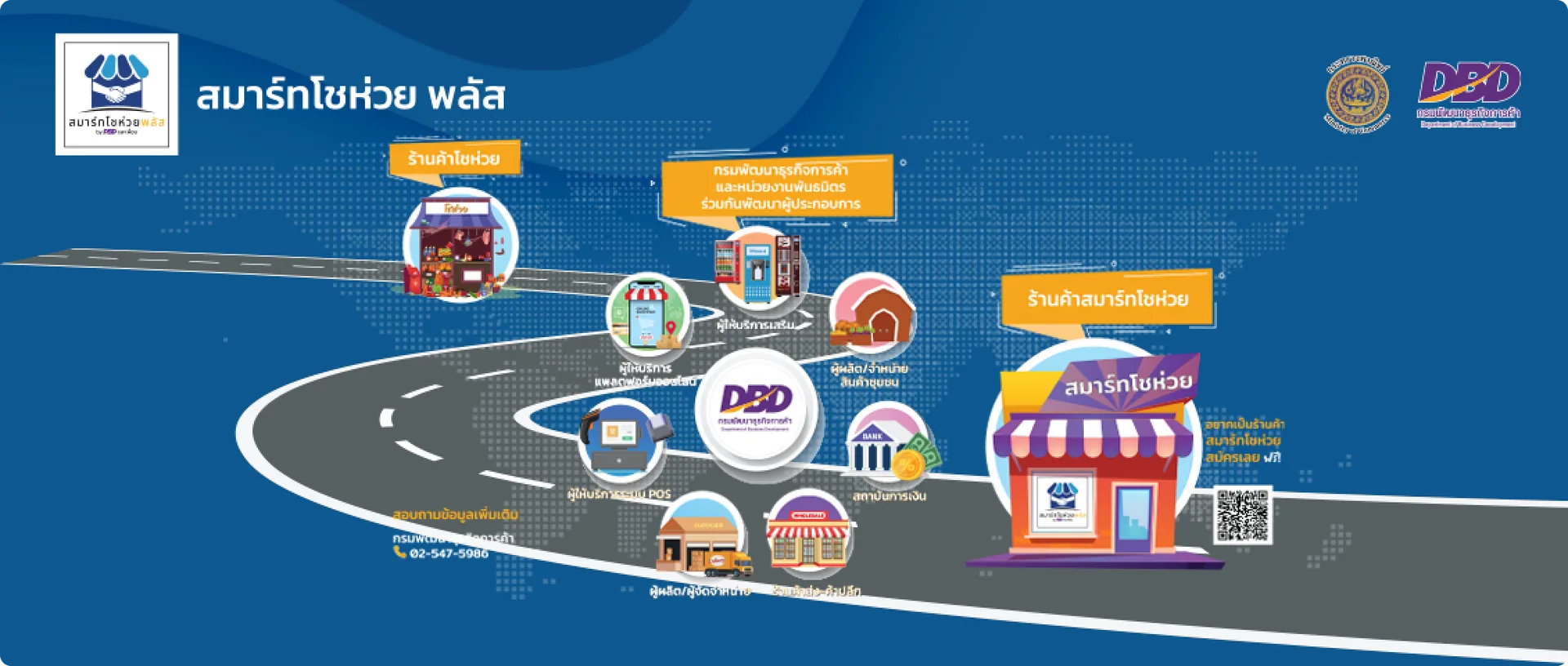 Department of Business DevelopmentHelping neighbourhood grocery stores adaptStock systems, store design and digital-marketing skills, with ministry staff as mentorsSee the case →
 SC AssetSC Verse: a virtual channel for real homesSpecial offers for every residential project registered through SC Asset VerseSee the case →
Related


One email a week
S-Curve Weekly
The week's signals and one deep read, chosen for leaders.
One email a week. Leave whenever you like.
Where is your business on its curve?
Talk it through with our growth team: a first conversation, no deck required.