
Behind the S-Curve · Insight · Growth Strategy
10 risks for 2025, from economic risks to the impact of AI, and where WEF ranks them
The 10 economic, environmental and technological risks this article picked for 2025, from geopolitical conflict and economic crisis to cyber threats and AI's downsides, each match a risk in the World Economic Forum's (WEF) Global Risks Report 2025, which files several in other categories and ranks them from 1st to 31st of 33 over two years 1.
- The tension · 01
In the WEF's report of January 2025, 23% of surveyed experts picked state-based armed conflict as the year's likeliest global crisis 1.
- The tension · 02
A year later, geoeconomic confrontation (tariffs, sanctions, investment screening) took first place, picked by 18% 2.
- The insight · 03
Yet Thai business leaders surveyed by the WEF put debt and economic downturn at the top of their country's list 2.

Key numbers
23%1
Experts who picked state-based armed conflict as 2025's likeliest global crisis (WEF)
18%2
Experts who picked geoeconomic confrontation for 2026, now first (WEF)
50%2
Experts expecting a turbulent or stormy two years, up 14 points in a year (WEF)
235% of GDP3
Global debt in 2024, USD 251 trillion; the 2020 peak was 258% (IMF)
Contents (9)
- The tension
- The insight
- What leaders do
- The insight
- What leaders do
- Sources
The tension 01 / 09
Key takeaways in 60 seconds
The 10 economic, environmental and technological risks first picked for 2025 all match risks on the WEF's list of 33, though the WEF files geopolitical conflict and pandemics outside its economic category 1.
No economic-category risk makes the WEF's top 10 over two or ten years, in the 2025 or 2026 report; economic downturn sits just outside, 11th over two years in 2026 1 2.
Thai executives see it differently. In the WEF's 2025 Executive Opinion Survey, they ranked debt Thailand's top risk for the next two years, then economic downturn 2.
Global debt is still above its pre-COVID level. The International Monetary Fund (IMF) puts it at USD 251 trillion in 2024, just above 235% of GDP, against 230% before COVID 3.
Technological risks climb with time. Adverse outcomes of AI rank 30th over two years but 5th over ten in the 2026 report 2.
The tension 02 / 09
Top economic risks and the rest: the 10 as first published
The list as first written, in its own three groups, with the WEF risk each one matches.
The first edition opened on a world of interlinked crises and closed by calling on business, government and the public to build resilience together. Jenosize analysis It cited the WEF's Global Risks Report 2025, the 20th edition, published in January 2025 from a survey of over 900 experts, which calls on leaders to act urgently 1.
The first edition sorted its 10 into three groups of its own; the WEF uses five: economic, environmental, geopolitical, societal and technological 1. Each pick below keeps the first edition's text, then its WEF match.
- Geopolitical conflict and tension (first edition: economic). Rivalry between the US, China and Russia could bring sanctions, trade limits and new supply chains; Middle East and Asian conflicts could move energy prices and financial markets. Diversify partners; track trade policy. Jenosize analysis WEF: state-based armed conflict and geoeconomic confrontation, both geopolitical 1.
- Economic crisis and financial instability (economic). The post-COVID economy stayed fragile: US and European slowdowns, higher interest rates, high public debt. Track indicators, diversify investments, manage cash flow. Jenosize analysis WEF: economic downturn and debt, both economic 1.
- Health crises and pandemics (economic). Mutation, vaccine hesitancy and weak health systems keep new outbreaks a risk. Plan flexible work and workplace health measures. Jenosize analysis WEF: infectious diseases, societal 1.
- Labour shortages and inequality (economic). Falling birth rates and automation reshape work; workers without the right skills face unemployment. Invest in upskilling and fair access to opportunity. Jenosize analysis WEF: talent and/or labour shortages (economic) and inequality (societal) 1.
- Shortages of strategic resources (economic). Semiconductors, rare earths and clean energy face supply pressure from geopolitics and the environment, raising costs. Find other sources, recycle, build domestic capacity. Jenosize analysis WEF: concentration of strategic resources and technologies, economic; the 2026 report lists chips and rare earths among sectors recently targeted by sanctions 1 2.
- Environmental disasters and climate change (environmental and social). Floods, storms and heatwaves raise costs, and ESG pressure from governments and consumers grows; laggards may lose competitiveness. Adapt with clean energy, resilient supply chains, lower emissions. Jenosize analysis WEF: extreme weather events, environmental 1.
- Erosion of human rights and civil liberties (environmental and social). Information control, forced labour and privacy abuses bring legal and reputational risk. Set a human-rights policy; audit suppliers. Jenosize analysis WEF: erosion of human rights and/or civic freedoms, societal 1.
- Social division and misinformation (technological). Fake news on social media misleads consumers, hurts brands and fuels conflict. Govern information risk, check content with AI, communicate openly. Jenosize analysis WEF: misinformation and disinformation (technological), societal polarization (societal) 1.
- Technology and cyber threats (technological). AI, blockchain (Thai) and quantum computing bring opportunity and cyber risk, from ransomware to phishing. Invest in cyber security and train staff. Jenosize analysis WEF: cyber espionage and warfare, technological; cyber insecurity from 2026 1 2.
- Negative impacts of advanced technology (technological). Artificial intelligence (AI) and automation raise efficiency but bring privacy, security, job-loss and bias risks. Develop AI ethically; protect personal data. Jenosize analysis WEF: adverse outcomes of AI technologies, technological 1.
The tension 03 / 09
Global economic risks in WEF's ranking: where the 10 stand
Each pick against the WEF's ranking of 33 risks in the 2025 and 2026 reports.
Both rankings come from the WEF's Global Risks Perception Survey: 909 responses used (Sep–Oct 2024) for the 2025 report and 1,302 (Aug–Sep 2025) for 2026, each rating 33 risks over two and ten years 1 2.
Exhibit 1
Scorecard: the 10 picks in the WEF's two-year and ten-year rankings
How to read it: rank out of 33 in the 2026 report; a lower number is more severe (1 = most severe). ▲ = moved up since 2025, so seen as more severe; ▼ = moved down; the number after the arrow is the places moved; no arrow = same rank. A pick matching two WEF risks takes two rows.
| Pick (first edition's group) | WEF risk · category | 2-year rank (2026) | 10-year rank (2026) |
|---|---|---|---|
| 01 Geopolitics (economic) | WEF risk · categoryArmed conflict · geopolitical | 2-year rank (2026)5 ▼2 | 10-year rank (2026)12 |
| 01 Geopolitics (cont.) | WEF risk · categoryGeoeconomic confrontation · geopolitical | 2-year rank (2026)1 ▲8 | 10-year rank (2026)19 ▼1 |
| 02 Economic crisis (economic) | WEF risk · categoryEconomic downturn · economic | 2-year rank (2026)11 ▲8 | 10-year rank (2026)24 ▲3 |
| 02 Economic crisis (cont.) | WEF risk · categoryDebt · economic | 2-year rank (2026)16 ▼1 | 10-year rank (2026)17 ▲3 |
| 03 Pandemics (economic) | WEF risk · categoryInfectious diseases · societal | 2-year rank (2026)27 | 10-year rank (2026)22 ▼1 |
| 04 Labour, inequality (economic) | WEF risk · categoryLabour shortages · economic | 2-year rank (2026)29 ▼1 | 10-year rank (2026)32 ▼1 |
| 04 Labour, inequality (cont.) | WEF risk · categoryInequality · societal | 2-year rank (2026)7 | 10-year rank (2026)7 |
| 05 Strategic resources (economic) | WEF risk · categoryConcentration of strategic resources · economic | 2-year rank (2026)15 ▼3 | 10-year rank (2026)11 ▲2 |
| 06 Climate (environmental and social) | WEF risk · categoryExtreme weather events · environmental | 2-year rank (2026)4 ▼2 | 10-year rank (2026)1 |
| 07 Human rights (environmental and social) | WEF risk · categoryErosion of human rights · societal | 2-year rank (2026)8 ▲2 | 10-year rank (2026)16 ▲1 |
| 08 Misinformation (technological) | WEF risk · categoryMisinformation · technological | 2-year rank (2026)2 ▼1 | 10-year rank (2026)4 ▲1 |
| 08 Misinformation (cont.) | WEF risk · categoryPolarization · societal | 2-year rank (2026)3 ▲1 | 10-year rank (2026)9 ▼1 |
| 09 Cyber threats (technological) | WEF risk · categoryCyber insecurity (cyber espionage and warfare in 2025) · technological | 2-year rank (2026)6 ▼1 | 10-year rank (2026)8 ▲1 |
| 10 Advanced technology (technological) | WEF risk · categoryAdverse outcomes of AI · technological | 2-year rank (2026)30 ▲1 | 10-year rank (2026)5 ▲1 |
The first edition filed picks 01 and 03 as economic; the WEF files them as geopolitical and societal. Picks 04 and 08 each span two WEF categories 1. No economic risk makes the WEF's top 10 in either year 1 2.
Exhibit 2
Geoeconomic confrontation overtook armed conflict as the most-picked crisis
How to read it: share of experts who chose each risk as the one most likely to cause a global crisis in the year ahead, 2025 then 2026.
Economic downturn held 6th place on this one-year question both times 1 2.
The insight 04 / 09
Economic hazards: negatives, positives and the response
Where Thailand's executives see the economic threat, and what the evidence says on both sides.
The WEF's Executive Opinion Survey (EOS) asks over 11,000 business leaders which risks most threaten their own country over two years: 121 economies in 2024, 116 in 2025 1 2.
Exhibit 3
Thai executives put debt and economic downturn first
How to read it: Thailand's top five risks for the next two years, as ranked by the country's respondents in each round.
| Rank | EOS 2024 (2025 report) | EOS 2025 (2026 report) |
|---|---|---|
| 1 | EOS 2024 (2025 report)Economic downturn | EOS 2025 (2026 report)Debt (public, corporate, household) |
| 2 | EOS 2024 (2025 report)Private debt (corporate, household) | EOS 2025 (2026 report)Economic downturn |
| 3 | EOS 2024 (2025 report)Pollution (air, water, soil) | EOS 2025 (2026 report)Lack of economic opportunity or unemployment |
| 4 | EOS 2024 (2025 report)Poverty and inequality | EOS 2025 (2026 report)Adverse outcomes of AI technologies |
| 5 | EOS 2024 (2025 report)Public debt | EOS 2025 (2026 report)Inequality (wealth, income) |
Negative effects in the reports
Positive signs in the same reports
Where debt tops Thailand's list, refinancing dates and currency exposure belong in the risk register, next to the cash-flow discipline the first edition advised. Jenosize analysis
The insight 05 / 09
Technological risks: the impact of AI, cyber and blockchain
Technology risks look distant over two years and severe over ten.
- Misinformation and disinformation ranked 1st over two years in the 2025 report and 2nd in 2026; the 2025 report says generative AI lets false or misleading content be made and spread at scale 1 2.
- Cyber risk ranked 5th, then 6th, over two years 1 2. In 2025 the WEF counted ransomware under crime and illicit economic activity, an economic risk; its 2026 definition of cyber insecurity names ransomware itself 1 2.
- Adverse outcomes of AI technologies ranked 31st over two years but 6th over ten in 2025, then 30th and 5th in 2026, which the 2026 report calls the largest upward shift, from the two-year to the ten-year list, of all 33 risks 1 2.
Blockchain appears once in the 2025 report, as blockchain-based rights management, a trust standard still under development 1. The 2026 report sees quantum technology as both an opportunity and a front of strategic rivalry 2.
What leaders do 06 / 09
Using the global risks ranking in your own plan
Three steps to turn two lists into one risk register. Jenosize's recommendation.
The WEF's experts rate global severity; Thailand's executives rate threats to their own country 1 2. A Thai company needs both readings. Jenosize analysis
- Map each risk you track to the WEF's 33 names and five categories. The WEF keeps each risk's core concept broadly consistent between surveys 2. That makes the January report a yearly benchmark. Jenosize analysis
- Weigh the global list against Thailand's top five. Debt and economic downturn lead Thailand's list, while no economic risk makes the global top 10 1 2. Stress-test cash flow and refinancing first. Jenosize analysis
- Keep a ten-year line for climate and AI. Extreme weather ranks first over ten years in both reports, and AI's adverse outcomes reach 5th over ten years in 2026 1 2. Drill site plans and review AI controls each year, as in Japan's earthquake technology. Jenosize analysis
The insight 07 / 09
Questions people ask about economic and global risks
Which risks does the WEF count as economic risks?
Nine of its 33: asset bubble burst, concentration of strategic resources and technologies, crime and illicit economic activity, debt, disruptions to a systemically important supply chain, disruptions to critical infrastructure, economic downturn, inflation, and talent and/or labour shortages.
What changed in the Global Risks Report 2026?
Geoeconomic confrontation became the top risk, and economic downturn and inflation each rose eight places on the two-year list, to 11th and 21st.
What leaders do 08 / 09
What leaders should do now
One move each for the CEO, CFO and CTO. Jenosize's recommendation.
CEO
Review risks on two lists
The WEF's global ranking and Thailand's executive survey disagree on the economy 1 2. Review both each January; name an owner for each top risk.
CFO
Stress-test debt and refinancing
Debt leads Thailand's 2025 list 2, and the WEF warns that a trade war with a stronger US dollar could hit firms refinancing dollar debt 1. Map maturities and currency exposure.
CTO
Budget cyber and AI controls for both horizons
Cyber insecurity ranks 6th over two years; AI's adverse outcomes rank 5th over ten 2. Fund cyber defence now; review AI use cases yearly.
What to watch through 2027
How Jenosize helps
Jenosize describes itself as a Business Growth Transformation Partner and was founded in 2011. Our consultants find the real constraints on growth and build the business case for the board. Our technology and AI teams build the shared rails; our marketing and events teams put new propositions in front of real customers. See Jenosize's consulting service.
09 / 09
Sources
Grades: A = primary or official · B = reputable secondary · C = needs checking, never published.
- 1A
World Economic Forum (WEF), The Global Risks Report 2025, 20th edition, January 2025 (PDF) Open ↗
Standfirst · scene 1 · key number 1 · findings 1–2 · chapter 02, intro and all 10 picks · chapter 03, survey scope, scorecard (change since 2025), category notes and the current-risk chart · chapter 04, EOS 2024 column and the tariff, debt and inflation lines · chapter 05, all three ranks and blockchain · chapter 06, intro and steps 2–3 · pull quote · FAQ 2 · CEO and CFO cards · corrections (1)–(3) · WEF's own surveys · read 22 Nov 2026 (text of pp. 1–8, 12, 15, 31–32, 39, 44, 74–80 and printed p. 90; chart pages opened as images): Global Risks Perception Survey 2024–2025, 909 of 1,112 responses kept, collected 2 Sep–18 Oct 2024; 33 risks in five categories (Appendix A) · Figure B: state-based armed conflict 23%, extreme weather 14%, geoeconomic confrontation 8%, economic downturn 5% (6th) · Figure G: full two- and ten-year rankings, no economic risk in either top 10 · infectious diseases: spread “leading to a widespread loss of life and economic disruption” (societal) · cybercrime “including ransomware” sits in crime and illicit economic activity (economic) · EOS 2024: “over 11,000 business leaders in 121 economies”, April–August 2024; Thailand's top five: economic downturn, private debt, pollution, poverty and inequality, public debt · “higher import tariffs cause an increase in the price of imported goods” · “both government and private-sector debt levels continue to rise globally” · inflation “back under control”, central banks “cutting interest rates”; a strengthening US dollar in a trade war brings risks for “companies with US dollar debt refinancing needs” · Generative AI-created false content “produced and distributed at scale” · “blockchain-based rights management” among standards “under development” · Preface: leaders “acting urgently to mitigate the risks”
- 2A
World Economic Forum (WEF), The Global Risks Report 2026, 21st edition, January 2026 (PDF) Open ↗
Scene 2–3 · key numbers 2–3 · findings 2, 3, 5 · chapter 02, picks 05 and 09 · chapter 03, survey scope, scorecard (2026 ranks), the top-10 note and the current-risk chart · chapter 04, EOS 2025 column, interest rates and technology's benefits · chapter 05, all three ranks and quantum · chapter 06 · pull quote · FAQ 1–3 · the three role cards · what to watch 1–2 · WEF's own surveys · read 22 Nov 2026 (text of pp. 1, 3, 6–10, 14–16, 19, 27, 40–41, 61, 75–81, 89; chart pages opened as images): Global Risks Perception Survey 2025–2026, 1,302 of 1,564 responses used, collected 12 Aug–22 Sep 2025 · Figure 1: 50% turbulent or stormy over two years, “a 14 percentage-point increase” · Figure 2: geoeconomic confrontation 18%, state-based armed conflict 14%, extreme weather 8%, economic downturn 5% (6th) · Figure 10: full rankings, no economic risk in either top 10; economic downturn 11th and inflation 21st, each up eight; infectious diseases 27th, as last year · Table A.1: nine economic risks · “Cyber espionage and warfare” renamed “Cyber insecurity”, whose definition names ransomware; each risk's concept “broadly consistent” with previous surveys · EOS 2025: over 11,000 business leaders in 116 economies, March–June 2025; Thailand's top five: debt, economic downturn, lack of economic opportunity or unemployment, adverse outcomes of AI technologies, inequality · sanctions on “AI, chips, biotech, quantum, drones and rare earths” · interest rates “have risen from multi-decade lows in 2022” · technology's “vast potential benefits from health and education to agriculture and infrastructure” · quantum's “significant opportunities” and “another facet of strategic rivalry” · adverse outcomes of AI from #30 (two years) to #5 (ten years), “the largest upward shift across all 33 risks surveyed”
- 3A
International Monetary Fund (IMF), Fiscal Affairs Department, 2025 Global Debt Monitor, September 2025 (PDF) Open ↗
Key number 4 · finding 4 · chapter 04, debt stabilising · what to watch 3 · Official · read 22 Nov 2026: “total global debt (public plus private) reached USD 251 trillion in 2024”; global debt “peaked at 258 percent of GDP in 2020” and “has now nearly stabilized just above 235 percent, still higher than the pre-COVID level of 230 percent of GDP” · cited by the WEF Global Risks Report 2026 (endnote 52)
Left out on purpose: the article's three images (a hand holding a phone with a warning screen, a laptop showing illegible made-up charts, and a man in a hard hat), under the site's real-images rule; the two calls to use Jenosize's “digital consulting”, including the closing claim that it would connect all stakeholders (the consulting link is kept once, in How Jenosize helps); and client results as evidence (the work cards at the end are related work only; each card restates its own case page).
About this article: method, AI use, corrections, citation
- How we wrote this
- Revised from the earlier article at this address, first written as a look ahead to 2025 (the old site records no publish date). The first edition named the WEF's Global Risks Report 2025 but chose and grouped its 10 risks itself. This update keeps all 10 as first published, matches each to the WEF's own risk names and categories, and adds the key numbers, the scorecard, the current-risk chart, Thailand's executive survey from the 2025 and 2026 reports and the IMF's debt figures, all checked against the sources above on 22 Nov 2026.
- Use of AI
- Drafted by Fah, a Jenosize AI teammate, on 22 Nov 2026 from the earlier article and the sources listed. A separate reviewer checks every new fact against its source before release. This is general information, not financial or investment advice. A named Jenosize expert and a Thai editor still need to read it before it goes live.
- Corrections
- 22 Nov 2026, against the first edition: (1) The first edition filed geopolitical conflict (pick 01) and health crises and pandemics (pick 03) as economic risks; the WEF's own categories for them are geopolitical (state-based armed conflict, geoeconomic confrontation) and societal (infectious diseases) 1. (2) Picks 04 and 08 each match two WEF risks in different categories: talent and/or labour shortages (economic) and inequality (societal); misinformation and disinformation (technological) and societal polarization (societal) 1. (3) The first edition said the report had prompted policymakers and organisations worldwide to prepare urgently; the report itself calls on leaders to act urgently, and this edition says only that 1. (4) The service link text “Digital Consulting” now names Jenosize's consulting service. Later fact changes are logged here with dates.
Cite this article
Jenosize (2026). “10 risks for 2025, from economic risks to the impact of AI, and where WEF ranks them.” Behind the S‑Curve, updated 22 November 2026. https://www.jenosize.com/en/content/growth-strategy/global-risks-business-preparedness
From Jenosize work
Work by Jenosize on this topic.
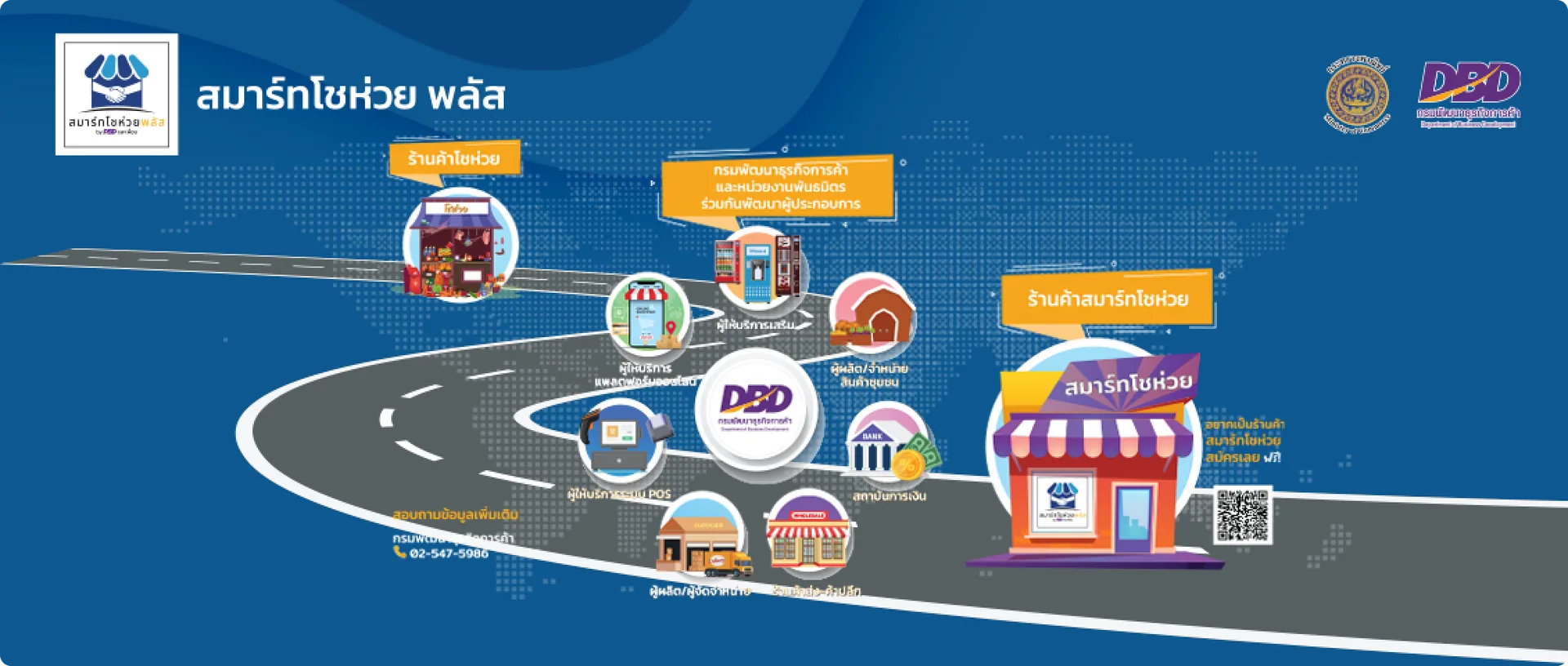 Department of Business DevelopmentHelping neighbourhood grocery stores adaptStock systems, store design and digital-marketing skills, with ministry staff as mentorsSee the case →
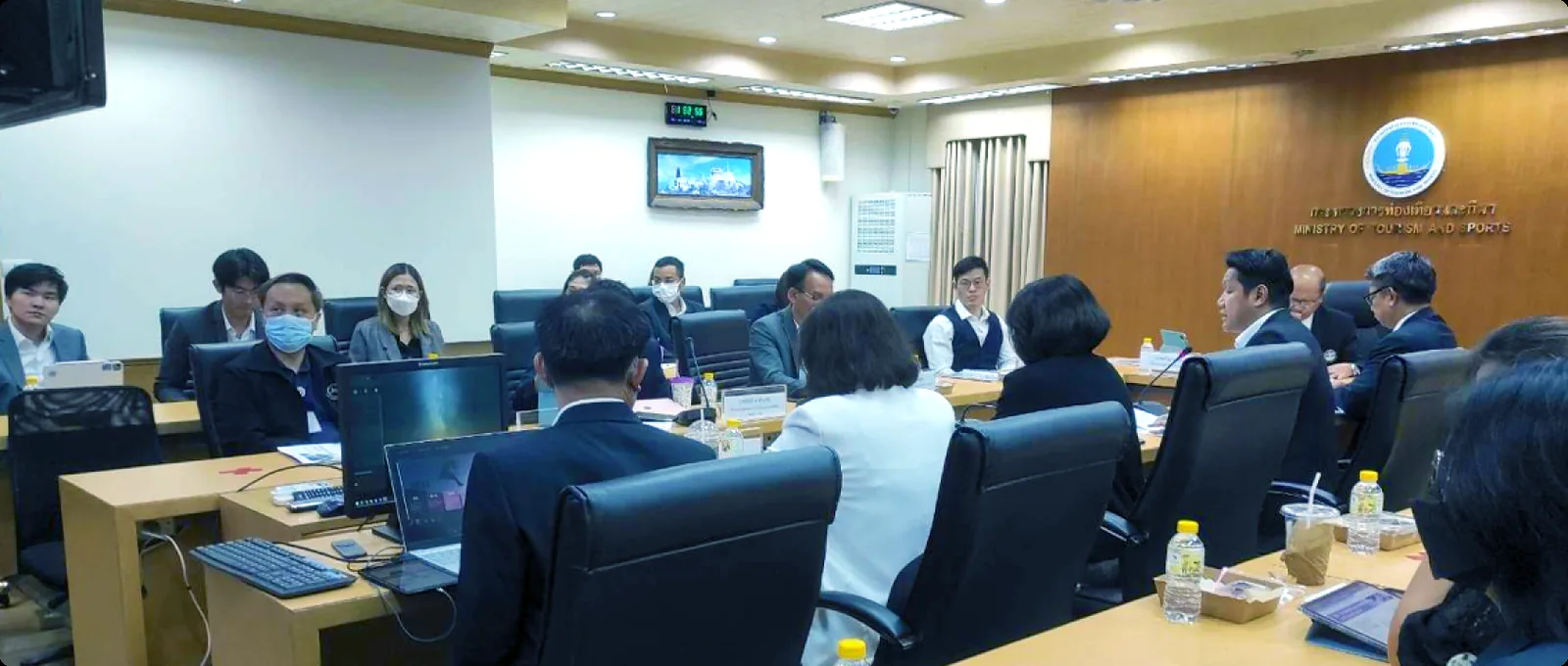 Tourism Authority of ThailandTAT Digital Marketing Action Plan 2024–2026A 3-year digital marketing plan (2024–2026) that TAT certified as delivered in fullSee the case →
Related


One email a week
S-Curve Weekly
The week's signals and one deep read, chosen for leaders.
One email a week. Leave whenever you like.
Where is your business on its curve?
Talk it through with our growth team: a first conversation, no deck required.