
Behind the S-Curve · Explained · Growth Strategy
What is an oligopoly market, and why fewer competitors still make selling hard
In economics, an oligopoly market is one with few companies selling, each of which knows its prices and output depend on its rivals' decisions and has some market power; the definition sets no fixed number of firms.

Contents (8)
- The tension
- The insight
- The tension
- The insight
- What leaders do
- Sources
The tension 01 / 08
Key takeaways in 60 seconds
An oligopoly market has a small number of sellers, and each knows its prices and output depend on its rivals'. The OECD definition used in FAO's AGROVOC thesaurus sets no fixed number of firms 1.
Market power is why oligopolies are watched. Firms with significant market power can raise prices above competitive levels and may limit output or exclude competitors 2.
In three of the first edition's five Thai examples, the players have changed. dtac and True completed their amalgamation on 1 March 2023 7, foodpanda stopped operating in Thailand in May 2025 8, and JD Central stopped taking orders on its Thai platform from 3 March 2023 and ended all its services on 31 March 2023 9 19.
Few sellers can still compete fiercely. A Trade Competition Commission study of Thai online marketplaces, as reported by Thai PBS, found the big platforms accepted early losses until rivals with less capital could not keep up 10.
The answer to the title is no: fewer competitors do not make selling easier. The first edition's reasons are high entry costs, fierce competition between the big players and higher customer expectations Jenosize analysis.
The insight 02 / 08
What is an oligopoly market, and what does oligopoly mean?
The definition from an international reference, what the word means, and the first edition's count of 2 to 10 firms.
Oligopoly market
An oligopoly market is one with a small number of firms that realise their pricing and output policies are interdependent, few enough for each firm to have some market power 1.
Oligopoly means control of a market by a few sellers: the word joins oligo- (“few; several”) with -poly, for the number of sellers in a market, by analogy with monopoly 6. The Cambridge Dictionary defines it as “a situation in which a small number of organizations or companies has control of an area of business, so that others have no share” 5.
The first edition said an oligopoly typically has at least two firms and no more than ten. Neither the OECD definition nor the dictionaries read sets that range 1 5. What sets an oligopoly apart is that each firm must think about its rivals' reply before it decides Jenosize analysis.
Exhibit 1
Three terms that travel with an oligopoly market
How to read: each card is one term and what it means in a market with only a few sellers.
- OligopolyFew sellers who depend on each otherA small number of firms that know their pricing and output depend on each other, each with some market power 1
- Market PowerRoom to move pricesThe ability to influence the price or supply of a product; firms with significant market power can raise prices above competitive levels 2
- CartelA formal agreementA formal agreement among firms in an oligopolistic industry on prices, output, market shares, customers or territories 3
In FAO's AGROVOC thesaurus, oligopoly sits under market structure, alongside monopoly and market concentration 4. Naming the structure first helps leaders choose whether to compete on price, product or service Jenosize analysis.
The insight 03 / 08
What are the characteristics of an oligopoly market?
Four traits to look for, and why new players find it hard to get in.
- Few sellers, each with some market power. The first edition explained that each firm's share is large enough for its decisions to move the whole market Jenosize analysis; the OECD definition says each firm has some market power 1.
- Decisions made with an eye on rivals. Each firm's pricing and output depend on the others' 1. The first edition added that each can set prices to a degree, never as freely as a monopoly, because rivals respond Jenosize analysis.
- Hard to enter. The first edition named high capital needs, specialised technology or expertise, and regulation and licensing as the main obstacles to entry in Thailand Jenosize analysis.
- A pull towards cooperation. A formal agreement among such firms on prices, output, market shares or customers is a cartel 3.
The first edition opened with a short history: monopolies once dominated business, and stricter antitrust laws broke large firms apart into oligopolies. That is the first edition's broad account, not checked here against a named case Jenosize analysis.
Licences, regulation and policy differ from one market to the next, so sort them into categories before entering a new one Jenosize analysis. See PEST Analysis.
The tension 04 / 08
Oligopoly market examples in Thailand, rechecked in 2026
Five markets from the first edition; in three of them the players have changed.
The first edition gave five Thai examples: beer, airlines, e-commerce platforms, mobile networks and food delivery apps (the old site records no publish date). This article checked the players against company websites and reports on 22 Nov 2026.
Exhibit 2
In three of the first edition's five Thai markets, a player has merged or left
How to read: each row is one market, the players the first edition named, and what the company's own website or report shows.
| Market | Players the first edition named | What the check found |
|---|---|---|
| Beer | Players the first edition namedBoon Rawd Brewery (Singha) · Thai Beverage (Chang) | What the check foundBoth companies still show a beer business on their own websites 13 14 |
| Airlines | Players the first edition namedThai Airways · Thai AirAsia · Nok Air · Thai Lion Air | What the check foundThai AirAsia and Nok Air still operate 11 12 · Thai Airways and Thai Lion Air not confirmed |
| E-commerce | Players the first edition namedShopee · Lazada · JD Central | What the check foundLazada still operates 18 · JD Central's own site said it took no more orders and would end all services on 31 March 2023 19 · Shopee: see the e-commerce section |
| Mobile | Players the first edition namedAIS · DTAC · TRUE | What the check founddtac and True became one company on 1 March 2023 7 · AIS still offers 5G and 4G service 15 |
| Food delivery | Players the first edition namedGrab · foodpanda · LINE MAN | What the check foundfoodpanda stopped operating in Thailand in May 2025 8 · Grab and LINE MAN still offer food delivery 16 17 |
Thai beer market
The first edition called beer a clear oligopoly, led by Boon Rawd Brewery (Singha) and Thai Beverage (Chang), with strict rules on advertising, production permits and distribution leaving new entrants almost no way in Jenosize analysis. As of 22 Nov 2026, both companies still show a beer business on their websites 13 14. The combined market share it gave is not printed here: no regulator's page or company report read gives it.
Airline industry
The first edition named Thai Airways, Thai AirAsia, Nok Air and Thai Lion Air, facing high fuel, maintenance and fleet costs and shocks such as COVID-19, which hit aviation hard Jenosize analysis. As of 22 Nov 2026, Asia Aviation PCL's website shows Thai AirAsia's hubs, and Nok Air's website takes bookings 11 12. Thai Airways' and Thai Lion Air's websites did not allow an automated read, so their status is not confirmed here.
E-commerce platforms
The first edition called e-commerce a relatively new market with oligopoly traits, naming Shopee, Lazada and JD Central, with logistics, costly marketing, consumer trust and customer retention as the challenges Jenosize analysis. The Nation reported on 30 Jan 2023 that JD Central would stop taking orders on its Thai platform from 3 March 2023, with customer service until 31 March 9. JD Central's own home page, as archived on 6 March 2023, told customers they could no longer place orders and that all its services would end on 31 March 2023 19. Thai PBS reported on 28 Aug 2026 a Trade Competition Commission study naming Shopee, Lazada and TikTok Shop as the main players in 2024; it says JD Central left in early 2023, short of capital while the leaders burned cash for share 10.
Mobile telecommunications market
The first edition said three providers, AIS, DTAC and TRUE, controlled the market, each investing in towers, spectrum auctions and 5G while facing hard price competition, service quality demands and the push for digital revenue Jenosize analysis. On 1 March 2023, dtac and True completed their amalgamation, receiving a commercial licence from the Department of Business Development as True Corporation Public Company Limited 7. AIS says it offers mobile service on 5G and 4G 15.
Food delivery apps
The first edition named Grab, foodpanda and LINE MAN, with the hard parts being revenue against cost, service quality, riders, costly promotions and constant technology development Jenosize analysis. Delivery Hero, foodpanda's owner, says in its 2025 annual report that foodpanda stopped its platform and food delivery services in Thailand in May 2025 8. As of 22 Nov 2026, Grab and LINE MAN still offer food delivery on their websites 16 17.
The changes between 2023 and 2025 show that a settled-looking market can still change shape Jenosize analysis. See New S‑Curve.
The insight 05 / 08
Oligopoly market advantages and disadvantages
The upsides and downsides for the players and for customers, then the answer to the title.
Fewer competitors do not make selling easier.
Advantages
- Each player has some market power, so it can set prices to a degree 1
- Big platforms with large user bases gain cost, technology and data advantages, the online-marketplace study found 10
- While the leaders fight for share, customers get discounts, promotions and free delivery 10
- Competition between big players pushes steady investment in products, services and innovation, in the first edition's view Jenosize analysis
Disadvantages
- Firms with significant market power can raise prices above competitive levels and may limit output or exclude competitors 2
- Once they lead, big platforms cut promotions and raise fees, and sellers lose bargaining power 10
- There is a pull to fix prices or share out customers in a cartel 3
- Players must invest heavily both to get in and to hold their share, in the first edition's view Jenosize analysis
Why do businesses in an oligopoly market have to invest more than expected?
The first edition asked this question and gave three reasons, which are Jenosize analysis Jenosize analysis.
- High barriers to entry. Few sellers, because getting in is hard: massive upfront investment, such as networks, towers and spectrum auctions in telecoms; constant technology spending, such as 5G or e-commerce platforms; and licences, inspections and strict regulation that cost time and money Jenosize analysis.
- More intense competition. Heavy spending on advertising and promotions, as with food delivery platforms' continuous discounts; constant new products and services; and the larger the share, the more it costs to keep customers Jenosize analysis.
- Higher consumer expectations. Customers expect premium service, such as airline safety and service standards, CSR and a good corporate image, and fast fixes in a crisis, such as a bank system outage or a mobile signal failure Jenosize analysis.
To the title's question, is selling easier with fewer competitors, the first edition answered no: the challenge lies in the scale of investment and the market's expectations more than the number of competitors Jenosize analysis. Thai online marketplaces are a checkable example: the big platforms accepted losses to build their user bases, and players with less capital left 10. See Generic Strategies for ways to compete against bigger rivals.
The insight 06 / 08
Frequently asked questions
How many firms are in an oligopolistic market?
The OECD definition used by FAO sets no number, only few enough for each firm to have some market power. Two firms or more can form an oligopoly, as long as each has to weigh its rivals' reply.
1 Jenosize analysis
How is an oligopoly different from a monopoly?
The first edition explained that oligopoly players can set prices to a degree, but never as freely as a monopoly, because rivals respond. That matches the definition's interdependent pricing and output.
Jenosize analysis 1
What leaders do 07 / 08
How leaders use it
One move each for the CEO, the CMO and the CFO, as Jenosize's recommendation.
CEO
Map the big players before you move on price
List the major players in your market and work out how each is likely to respond when you cut a price or launch a product Jenosize analysis.
CMO
Measure repeat buying after the promotion ends
Where big players compete on discounts, track whether customers keep buying after a promotion ends, alongside sales during the offer Jenosize analysis.
CFO
Budget for holding the market, in advance
Set aside steady investment for defending your share, and set internal rules, with legal counsel, on who may discuss prices with competitors Jenosize analysis.
How Jenosize helps
Jenosize describes itself as a Business Growth Transformation Partner and was founded in 2011. Our consultants find the real constraints on growth and build the business case for the board. Our technology and AI teams build the shared rails; our marketing and events teams put new propositions in front of real customers. See Jenosize's consulting service.
08 / 08
Sources
Grades: A = primary or official · B = reputable secondary · C = needs checking, never published.
- 1A
FAO, AGROVOC thesaurus, “oligopoly” (c_50273), definition from the OECD Glossary of Statistical Terms Open ↗
The definition: a small number of firms whose pricing and output policies are interdependent, few enough for each to have some market power; no fixed number of firms · Thesaurus of the UN Food and Agriculture Organization · read 22 Nov 2026
- 2A
FAO, AGROVOC thesaurus, “market power” (c_aa8a76ba) Open ↗
Market power: firms with significant market power can raise prices above competitive levels, limit output or exclude competitors; often in highly concentrated markets · FAO thesaurus · read 22 Nov 2026
- 3A
FAO, AGROVOC thesaurus, “cartels” (c_28646) Open ↗
A cartel is a formal agreement among firms in an oligopolistic industry on prices, output, market shares, customers or territories · FAO thesaurus · read 22 Nov 2026
- 4A
FAO, AGROVOC thesaurus, “market structure” (c_12405) Open ↗
Oligopoly is a narrower term under market structure, alongside monopoly and market concentration · FAO thesaurus · read 22 Nov 2026
- 5B
Cambridge Dictionary, “oligopoly”, Cambridge University Press Open ↗
The meaning of oligopoly: a small number of companies control an area of business; no range of firm numbers · Dictionary · read 22 Nov 2026
- 6B
Wiktionary, “oligopoly” (Etymology) Open ↗
The word's origin: oligo- (few) plus -poly (the number of sellers in a market), by analogy with monopoly · Collaborative dictionary, used for the word's origin only · read 22 Nov 2026
- 7A
True Corporation, “dtac & True Amalgamation Complete Under New Corporate Name ‘True Corporation Public Company Limited’”, 1 Mar 2023 Open ↗
dtac and True completed their amalgamation on 1 March 2023 as True Corporation Public Company Limited · Company announcement · read 22 Nov 2026
- 8A
Delivery Hero SE, Annual Report 2025 Open ↗
foodpanda stopped operating its platform and food delivery services in Thailand in May 2025 · Parent company's annual report · read 22 Nov 2026
- 9B
The Nation, “JD Central discontinues operations in Thailand on March 3”, 30 Jan 2023 Open ↗
JD Central stopped taking orders on its Thai platform from 3 March 2023, with customer service until 31 March 2023 · News report of the company's announcement · read 22 Nov 2026
- 10B
Thai PBS Policy Watch, “The ‘burn cash’ plan to win customers: how online shopping apps took the market” (Thai), 28 Aug 2026 (reporting a study by the Office of the Trade Competition Commission) Open ↗
Shopee, Lazada and TikTok Shop as the main players in 2024; JD Central left in early 2023; the big platforms accepted losses to win users, gained cost, technology and data advantages, then cut promotions and raised fees · News report of an agency study; no figures from it are used · read 22 Nov 2026
- 11A
Asia Aviation PCL, company website home page Open ↗
Thai AirAsia's operating hubs in Don Mueang, Suvarnabhumi, Phuket and Chiang Mai · Company website · read 22 Nov 2026
- 12A
Nok Air, company website home page Open ↗
Nok Air takes flight bookings · Company website · read 22 Nov 2026
- 13A
Thai Beverage, company website home page Open ↗
ThaiBev shows a beer business group · Company website · read 22 Nov 2026
- 14A
Boon Rawd Brewery, company website home page Open ↗
Boon Rawd shows a beer and alcoholic beverages business · Company website · read 22 Nov 2026
- 15A
Advanced Info Service (AIS), investor relations website Open ↗
AIS offers mobile service on 5G and 4G technology · Company website · read 22 Nov 2026
- 16A
Grab Thailand, GrabFood page Open ↗
Grab offers GrabFood delivery in Thailand · Company website · read 22 Nov 2026
- 17A
LINE MAN Wongnai, LINE MAN page Open ↗
LINE MAN offers food delivery in Thailand · Company website · read 22 Nov 2026
- 18A
Lazada Thailand, website home page Open ↗
Lazada operates online shopping in Thailand · Company website · read 22 Nov 2026
- 19A
JD Central, www.jd.co.th home page (closure notice), as archived by the Internet Archive on 6 Mar 2023 Open ↗
JD Central told customers they could no longer place orders and that the platform and all its services would end on 31 March 2023 (finding 3, the e-commerce row of the exhibit, the e-commerce section, correction 4) · The company's own page via the Internet Archive; the notice is an image in English and Thai · read 22 Nov 2026
Left out on purpose: the first edition's “over 90%” combined beer market share for Singha and Chang, because no regulator's page or company report read gives it; the “billions of baht” value of spectrum auctions, because the NBTC's result pages could not be opened; the market-share and concentration figures in the news report of the Trade Competition Commission's online-marketplace study, because the agency's own report has not been read; the details of Thailand's trade competition law, because the Commission's website and the Royal Gazette could not be opened on the day of the check; the status of Thai Airways and Thai Lion Air, because their websites did not allow an automated read; the four earlier images (three show hands or people, and the airliner shows marks of an AI-generated image) under the site's real-images rule; and client results as evidence (the work cards at the end are related work only; each card restates its own case page).
About this article: method, AI use, corrections, citation
- How we wrote this
- Revised from the earlier article at this address (the old site records no publish date) on 22 Nov 2026. The first edition's explanation, its five market examples and its three reasons are all kept, with the examples marked as the first edition's list; four claims are corrected, and the update adds the definition from FAO's AGROVOC thesaurus, the word's meaning from dictionaries, the players' status from company websites and reports, and the Trade Competition Commission's online-marketplace study as reported by Thai PBS. Facts were checked against the sources above on 22 Nov 2026. The status table states only what a website or report showed on the day it was read; the first edition's reasons, the lines tagged as analysis and the leader moves are Jenosize analysis.
- Use of AI
- Drafted by Fah, a Jenosize AI teammate, on 22 Nov 2026 from the earlier article and the sources listed. This is general information, not legal or investment advice. A named Jenosize expert and a Thai editor still need to read it before it goes live.
- Corrections
- 22 Nov 2026: (1) The first edition said an oligopoly typically has from two to ten firms; the OECD definition used by FAO and the Cambridge Dictionary set no fixed number 1 5. (2) The first edition named AIS, DTAC and TRUE as the three main mobile providers, which may have been true when it was written; dtac and True became True Corporation Public Company Limited on 1 March 2023 7. (3) The first edition named foodpanda as a main food delivery provider; foodpanda stopped operating in Thailand in May 2025 8. (4) The first edition named JD Central as a main e-commerce player; JD Central stopped taking orders in Thailand from 3 March 2023 and ended all its services on 31 March 2023 9 19. Also: the “over 90%” beer figure is not printed in this edition because no primary source was found, and the account of antitrust laws breaking up large businesses is kept as the first edition's view.
Cite this article
Jenosize (2026). “What is an oligopoly market, and why fewer competitors still make selling hard.” Behind the S‑Curve, updated 22 November 2026. https://www.jenosize.com/en/content/growth-strategy/oligopoly-market-in-thailand
From Jenosize work
Work by Jenosize on this topic.
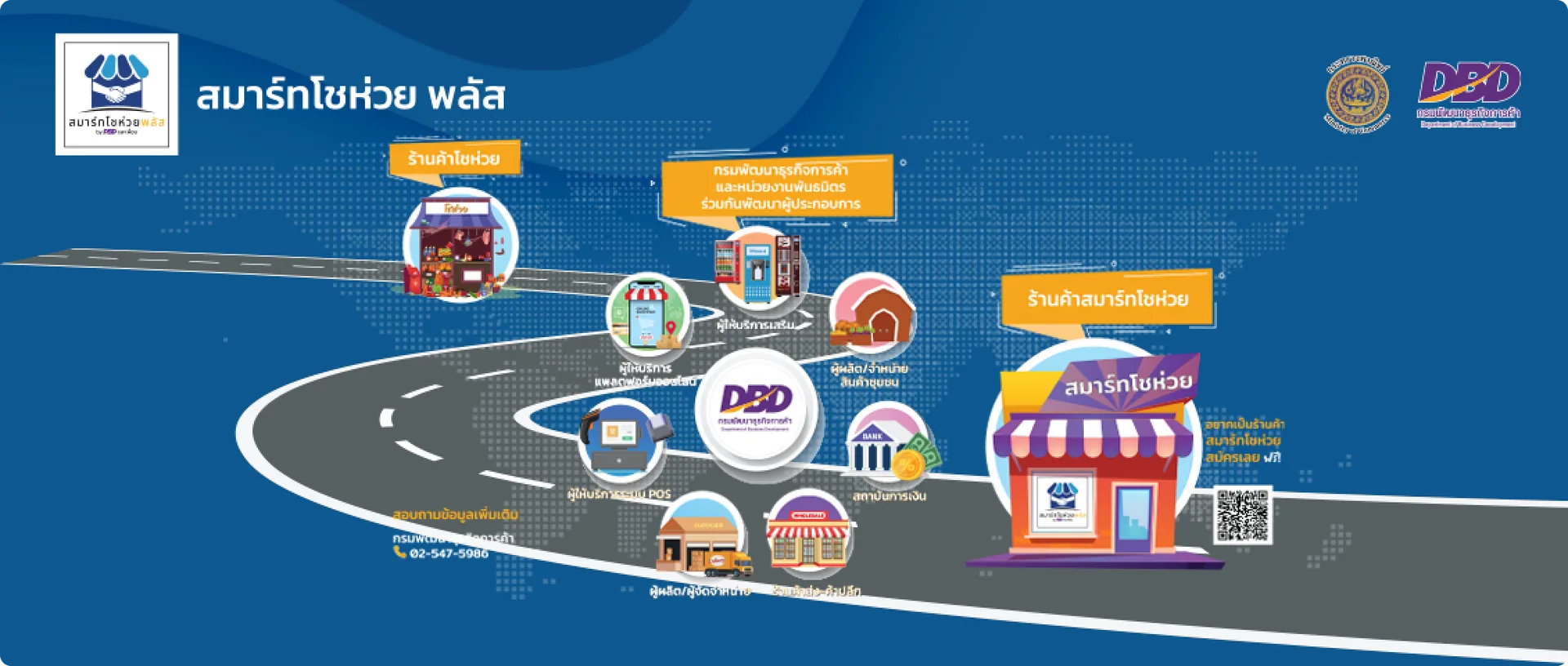 Department of Business DevelopmentHelping neighbourhood grocery stores adaptStock systems, store design and digital-marketing skills, with ministry staff as mentorsSee the case →
 Tourism Authority of ThailandTAT Digital Marketing Action Plan 2024–2026A 3-year digital marketing plan (2024–2026) that TAT certified as delivered in fullSee the case →
Related


One email a week
S-Curve Weekly
The week's signals and one deep read, chosen for leaders.
One email a week. Leave whenever you like.
Where is your business on its curve?
Talk it through with our growth team: a first conversation, no deck required.