
Behind the S-Curve · Explained · People & Culture
What is an organization chart? A good chart shows who makes the decisions
Get to know the tool that maps the chain of command and reflects the organizational structure, with how to lay out the chart so it is clear who reports to whom and who holds decision-making authority in each part.

Contents (9)
- The tension
- The insight
- What leaders do
- The insight
- What leaders do
- Sources
The tension 01 / 09
Key takeaways in 60 seconds
An organization chart (or organizational chart) is a diagram of an organizational structure: people, departments and jobs, with lines for how they relate. The structure is how the organization arranges that work 1 2
Unclear roles are common. In Gallup's data as of August 2026, only 46% of U.S. employees say they know what is expected of them at work 4
Org chart is short for organization chart. In the Royal Society of Thailand's official terms it is แผนภูมิองค์การ, and chain of command is สายการบังคับบัญชา 3
Four structures are common: hierarchical or functional, divisional, matrix and flat. Each puts coordination in a different place Jenosize analysis
In January 2022 Unilever announced it would leave its matrix structure for five Business Groups, each accountable for its own strategy, growth and profit 7
A useful org chart shows who decides what, and changes when the strategy or the team does Jenosize analysis
The tension 02 / 09
What is an organization chart vs organization structure?
The chart is the picture, the structure is how work is arranged, and when the picture is unclear people lose track of what is expected.
Organization chart
An organization chart is a diagram that shows the structure of an organization and the relationships between its people, departments and jobs, usually drawn as boxes connected by straight lines 1
Cambridge's business dictionary treats organization chart and organizational chart as one term 1. At work it is shortened to org chart; the official Thai term is แผนภูมิองค์การ 3. A good chart shows how authority and responsibility are spread across departments and people, and works like a compass: it tells people their role, who is who, who they report to and who they work with.
Organizational structure
Organizational structure is the way a company or organization is organized, for example the types of relationships that exist between managers and employees 2
The first version of this article treated Organization Chart and Organization Structure as one thing. This version separates them, following Cambridge 1 2. The chart is a picture of the structure. Redrawing the chart takes a day; changing the structure changes who decides what Jenosize analysis
The stakes are real. In Gallup's data as of August 2026, only 46% of U.S. employees say they know what is expected of them at work 4. The survey covers the U.S. and does not measure org charts.
A chart that is out of date, or lists titles without showing who decides, is where that confusion starts Jenosize analysis
The main components of an organization chart
- Hierarchical levels. Levels of authority, from top executives to operational staff.
- Departments or divisions. Work split by function, such as Marketing, Accounting and Finance, and Human Resources.
- Job titles. Each employee's position and role.
- Lines of authority. Reporting lines between superiors and subordinates.
A good chart is clear and complete, avoids duplicated roles and helps people communicate. Review it regularly as the organization changes and grows.
The insight 03 / 09
Org chart terms in English and Thai
The words people use at work, the dictionary term, and the official Thai term for teams working in Thailand.
The diagram is an organization chart; the arrangement behind it is an organizational structure, sometimes written organization structure 1 2. The Royal Society of Thailand's official terms use องค์การ for organization, as in แผนภูมิองค์การ 3.
Exhibit 1
Org chart vocabulary: everyday term, English term, official Thai term
How to read: one row per term, from the word used at work to the English term and the official Thai term.
| Everyday term | English term | Official Thai term |
|---|---|---|
| Org chart | English termOrganization chart, organizational chart | Official Thai termแผนภูมิองค์การ |
| Company structure | English termOrganizational structure (or organization structure) | Official Thai termNo entry of its own; โครงสร้างองค์การ appears under flat organizational structure |
| Reporting line | English termChain of command, hierarchy, scalar chain | Official Thai termสายการบังคับบัญชา |
| Authority down the line | English termLine authority | Official Thai termอำนาจหน้าที่ตามสายการบังคับบัญชา |
| People per manager | English termSpan of control | Official Thai termช่วงของการควบคุม |
| Splitting into departments | English termDepartmentalization | Official Thai termกระบวนการจัดแผนกงาน |
| Business-unit structure | English termDivisional structure | Official Thai termโครงสร้างแบบแผนกงาน |
| Matrix | English termMatrix organization | Official Thai termองค์การแบบเมตริกซ์ |
| Flat company | English termFlat organization, flat organizational structure | Official Thai termองค์การแบบแบนราบ, โครงสร้างองค์การแบบแบนราบ |
Chain of command
The chain of command is the line of authority that runs from one level of an organization to the next, top to bottom, and makes clear who reports to whom 5
It pairs with unity of command: each person takes instructions from one boss 5. Span of control is the number of employees a manager can supervise 5 3. Both let a reader see more than job titles Jenosize analysis
The insight 04 / 09
What an organization chart does for a business and HR
Five jobs a chart helps with, from clear roles to workforce planning.
Running an organization well takes clear planning and a clear structure. When employees understand their roles, they feel part of the organization and work more efficiently. An org chart helps in five ways.
- Clear roles. It shows what each department owns, who reports to whom, who works with whom and who can decide, so people work toward the organization's goals.
- Faster teamwork. Communication skips unnecessary steps, and the chart shows how departments relate, so coordination is smoother and goals come sooner.
- Growth without stalls. It shows today's structure and whether it can grow, so weak spots get fixed as the market changes. When each person knows their job, duplicated work falls and expansion moves faster, with fewer obstacles.
- HRM (human resource management). HR can analyse workforce needs, plan recruitment, development and retention, set KPIs, evaluate performance more accurately and set pay and benefits for each position.
- HRD (human resource development). HR can pick channels that fit the structure, such as email or Microsoft Teams in a flat company 10. A structure built for development gives people more room to learn and grow than an unclear one, so they see a future there.
HRM manages people; HRD develops them. Both run on the same chart, and when it shows what each position owns, each KPI gets a named owner Jenosize analysis (Read next: OKR vs KPI)
Redrawing the chart takes a day; changing the structure changes who decides what Jenosize analysis
The insight 05 / 09
Business organizational structure charts: 4 main types
Each type chooses where coordination happens.
Three types are common in many organizations: hierarchical, flat and matrix. A fourth, the divisional structure, appears when a company spreads across several product lines 9.
Exhibit 2
Four structures: what each suits, and what to watch
How to read: one row per structure; read across from how work is grouped to what to watch for.
| Type | How work is grouped | Suits | Watch for |
|---|---|---|---|
| Hierarchical or functional | How work is groupedThe traditional form: top-down levels, departments by function such as marketing, accounting and HR | SuitsLarge organizations with clear departments and roles | Watch forWork that crosses departments waits for each head to sign off |
| Divisional | How work is groupedBy product, market or region; each division's leader owns its strategy, growth and profit | SuitsCompanies with several products or markets | Watch forDuplicated work across divisions, so a central unit runs shared systems |
| Matrix | How work is groupedA blend: a primary reporting line plus a secondary line to project managers | SuitsOrganizations with cross-functional projects | Watch forTwo bosses, so a tie-break rule is needed when priorities clash |
| Flat | How work is groupedHorizontal: fewer levels, more collaboration | SuitsSmall organizations with high flexibility | Watch forEach manager oversees more people, and unowned decisions drift to the top |
The idea that structure follows strategy comes from Alfred D. Chandler Jr., the business historian who wrote Strategy and Structure (M.I.T. Press, 1962) 8. Studying Du Pont, Sears Roebuck, General Motors and Standard Oil, he found that as product lines multiplied they moved from functional to divisional structures 9.
In Harvard Business Review in May 1978, Stanley M. Davis and Paul R. Lawrence called it a relatively new form with considerable popularity and some significant pathologies 6. The common one: people report to more than one boss and cannot tell whose priorities come first 5.
On 25 January 2022, Unilever announced it would move away from its matrix structure to five Business Groups (Beauty & Wellbeing, Personal Care, Home Care, Nutrition and Ice Cream), each accountable for its own strategy, growth and profit globally, with shared operations running technology, systems and processes 7.
The right type depends on size, products, environment and strategy, and on how coordination, decentralised decisions and internal communication are handled. Two questions narrow it: how many departments does this year's key work cross, and who settles disagreements Jenosize analysis
What leaders do 06 / 09
How to draw a small company org chart in 5 steps
Start from the decisions that repeat, then draw the boxes.
A small company rarely needs many levels. It needs a chart that says who decides what comes up every week Jenosize analysis
- List the decisions that repeat: discounts, new hires, spending approvals, customer complaints Jenosize analysis
- Group work by function first. Three departments are a fair start: sales and marketing; operations and customer service; accounting, finance and HR Jenosize analysis
- Give each position one direct boss, following unity of command 5. Where projects cross departments, write a tie-break rule next to the chart.
- Write decision rights under each box: the 2–3 things its owner decides alone, and what goes up Jenosize analysis
- Date the chart and review it when the business changes: when people join or leave, roles change or a product launches, so it keeps pace with growth.
Exhibit 3 · Illustrative
Small company org chart example: three departments report to the managing director
How to read: the managing director sits on top; each column is a department reporting directly, with what its head decides and what goes up.
- 1Sales and marketingDecides: promotions and discounts within agreed limits · Escalates: bigger discounts, major customer contracts
- 2Operations and customer serviceDecides: schedules, planned orders, routine complaints · Escalates: complaints that risk the company's reputation
- 3Accounting, finance and HRDecides: payments within budget, leave, pay within the salary structure · Escalates: unbudgeted spending, new headcount
As the company grows, ask how many people each manager should oversee. A narrow span of control allows close supervision but adds levels, cost and slower decisions; a wide span is faster and more flexible but can spread managers too thin 5. Routine work allows wide spans; complex, varied work needs narrow ones 5.
When the chart changes faster than the file, an HR system holding employee records and approval lines in one place keeps it in step with the work Jenosize analysis (Read next: 7 best HR programs)
A useful org chart shows who decides what Jenosize analysis
The insight 07 / 09
Frequently asked questions
What is an org chart?
The short form of organization chart: a diagram of who holds which position, in which department, and how they relate.
Is an organization chart the same as an organizational chart or a corporate org chart?
Yes. Cambridge's business dictionary lists organization chart as another form of organizational chart. Business, company and corporate org charts are the same diagram
1 Jenosize analysis
How often should a company update its org chart?
Update it when people join or leave or roles move, and review the whole chart with the annual plan
Jenosize analysis
What leaders do 08 / 09
How leaders use an organization chart
One move each for the CEO, the head of HR and the COO, as Jenosize recommends.
CEO
Make the chart show who decides
Ask each top-level box to list the 2–3 decisions its owner makes alone, and open the annual strategy review with that chart; structure should follow strategy 9.
Head of HR
Run HR from one chart
Tie workforce plans, KPIs and pay structures to the positions on one chart, so all three change when the chart does Jenosize analysis
COO
Write tie-break rules for cross-team work
Find positions that report to more than one boss 5, decide who settles a clash, and track how long cross-team work waits for a decision Jenosize analysis
What to review before next year's planning round
- Positions with two bosses: is the tie-break rule written down?
- Managers with too many direct reports to coach, and levels that add no value
- Empty boxes, duplicated roles and work no one owns
- When the chart was last updated, against the last big reorganization
How Jenosize helps
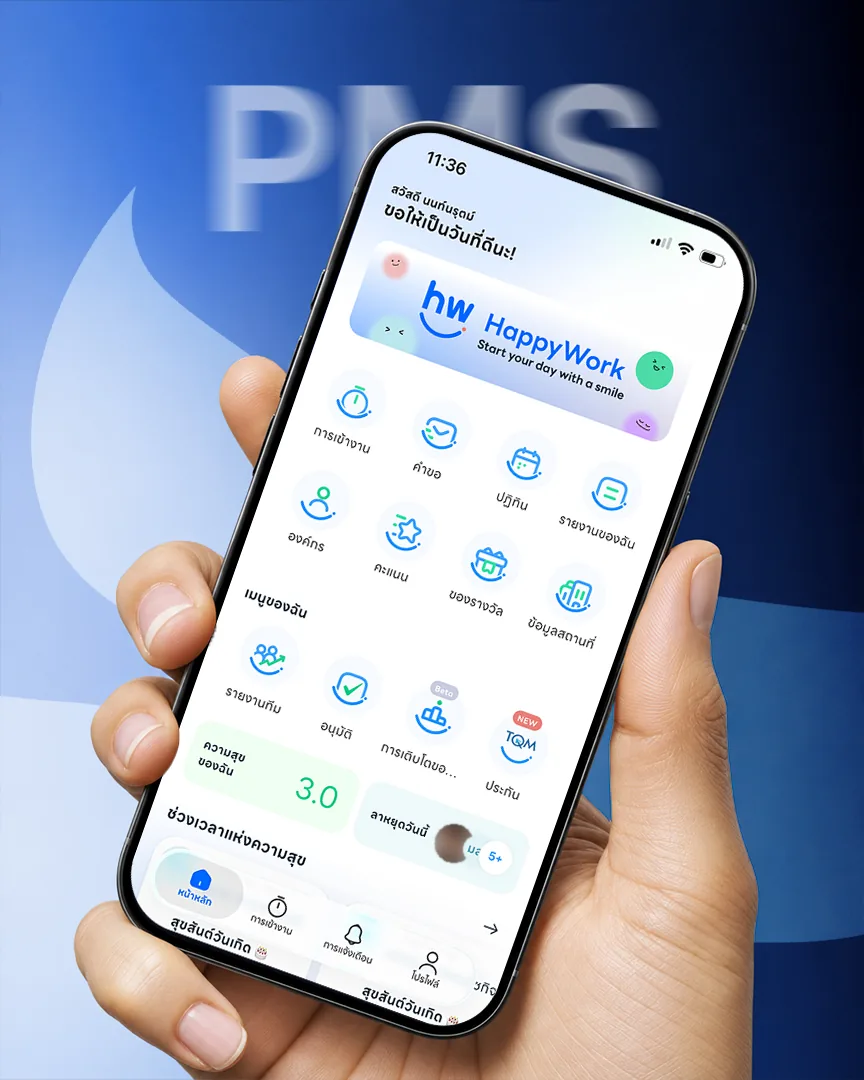
Jenosize describes itself as a Business Growth Transformation Partner and was founded in 2011. Our consultants find the real constraints on growth and build the business case for the board. HappyWork, the first product Jenosize built and brought to market, is HR software in one app: check-in, leave, approvals, company news and payroll-ready reports.
09 / 09
Sources
Grades: A = primary or official · B = reputable secondary · C = needs checking, never published.
- 1A
Cambridge Business English Dictionary, “organizational chart” (also organization chart), Cambridge University Press Open ↗
Definition of an organization chart · organization chart and organizational chart are the same term · the English chart terms in the vocabulary table · University-press dictionary · read 21 Nov 2026
- 2A
Cambridge Business English Dictionary, “organizational structure”, Cambridge University Press Open ↗
Definition of organizational structure · the chart is separate from the structure · University-press dictionary · read 21 Nov 2026
- 3A
Office of the Royal Society of Thailand, coined terms in 40 fields (business administration) Open ↗
Official Thai terms: organization chart, chain of command, line authority, span of control, departmentalization, divisional structure, matrix organization, flat organization · Government body that coins official terms · each term searched 21 Nov 2026
- 4A
Gallup, “Global Indicator: Employee Engagement” Open ↗
As of August 2026, 46% of U.S. employees say they know what is expected of them at work (Q12 item Q01) · The survey owner's own data · read 21 Nov 2026
- 5B
OpenStax (Rice University), Introduction to Business 2e, section 7.4 “Authority: Establishing Organizational Relationships” (published 22 Apr 2026) Open ↗
Definition of the chain of command · the unity of command principle · matrix employees report to more than one boss · the trade-offs of narrow and wide spans of control · Open university textbook, reliable secondary source · read 21 Nov 2026
- 6A
Stanley M. Davis and Paul R. Lawrence, “Problems of Matrix Organizations”, Harvard Business Review, May 1978 Open ↗
The matrix had gained considerable popularity but had some significant pathologies that come from the design itself · Original article · opening paragraph (the free part) read 21 Nov 2026
- 7A
Unilever PLC, “Unilever simplifies organisation”, regulatory announcement (RNS), 25 Jan 2022 Open ↗
Moving away from the matrix structure · five Business Groups, each responsible and accountable for strategy, growth and profit globally · shared Business Operations for technology, systems and processes · The company's own announcement (as distributed on the market news service) · read 21 Nov 2026
- 8A
Alfred D. Chandler Jr., Strategy and Structure: Chapters in the History of the Industrial Enterprise, M.I.T. Press, Cambridge, 1962 Open ↗
Author, title, year and publisher · Book · Open Library catalogue record OL5851719M opened 21 Nov 2026 (M.I.T. Press, 1962, xiv + 463 pages, LCCN 62011990); the book itself was not opened
- 9B
London Business School, “Strategy and structure redux”, London Business School Think Open ↗
Chandler's view that strategy comes before structure · the companies he studied (Du Pont, Sears Roebuck, General Motors, Standard Oil) · the shift from functional to divisional structures as product lines multiplied · Reliable secondary source · the page carries no date · read 21 Nov 2026
- 10A
Microsoft Learn, “Introduction to Microsoft Teams for admins” (updated 14 Aug 2026) Open ↗
The product's official name, Microsoft Teams (the first version wrote MS Teams) · The maker's documentation · read 21 Nov 2026
Left out on purpose: the old cover image (about 15 people standing on blue blocks, which the article standard counts as a stock photo of people); the closing sales lines of the first version (“Jenosize can assist you”, “makes HR management easier than ever before” and “Try it for free today”), which no source supports, with the HappyWork link moved to How Jenosize helps; and client results as numbers (no client has approved one for this article).
About this article: method, AI use, corrections, citation
- How we wrote this
- Updated from the earlier article at the same address (the old site recorded no publish date) on 21 Nov 2026. Every fact of the first version is kept. This update separates the organization chart from the organizational structure and adds the English and official Thai terms, the divisional structure, the origin of the structure-follows-strategy idea, the Unilever example, the Gallup figure and a small-company example chart. Facts were checked against the sources above on 21 Nov 2026. The tables and columns are concept diagrams, not measured data.
- Use of AI
- Drafted by Fah, a Jenosize AI teammate, on 21 Nov 2026 from the earlier article and the listed sources. A named Jenosize expert and a Thai editor must read it before it goes live.
- Corrections
- 21 Nov 2026: (1) The first version treated Organization Chart and Organization Structure as one thing; this version separates the chart (the diagram) from the structure (how the organization is arranged), following the Cambridge Business English Dictionary 1 2. (2) The first version said HRM “involves managing services”; HRM is the management of people, now stated that way. (3) “MS Teams” is now written with the product's official name, Microsoft Teams 10.
Cite this article
Jenosize (2026). “What is an organization chart? A good chart shows who makes the decisions.” Behind the S‑Curve, updated 21 November 2026. https://www.jenosize.com/en/content/people-culture/getting-to-know-org-chart-and-structures

Related



One email a week
S-Curve Weekly
The week's signals and one deep read, chosen for leaders.
One email a week. Leave whenever you like.
Where is your business on its curve?
Talk it through with our growth team: a first conversation, no deck required.